T
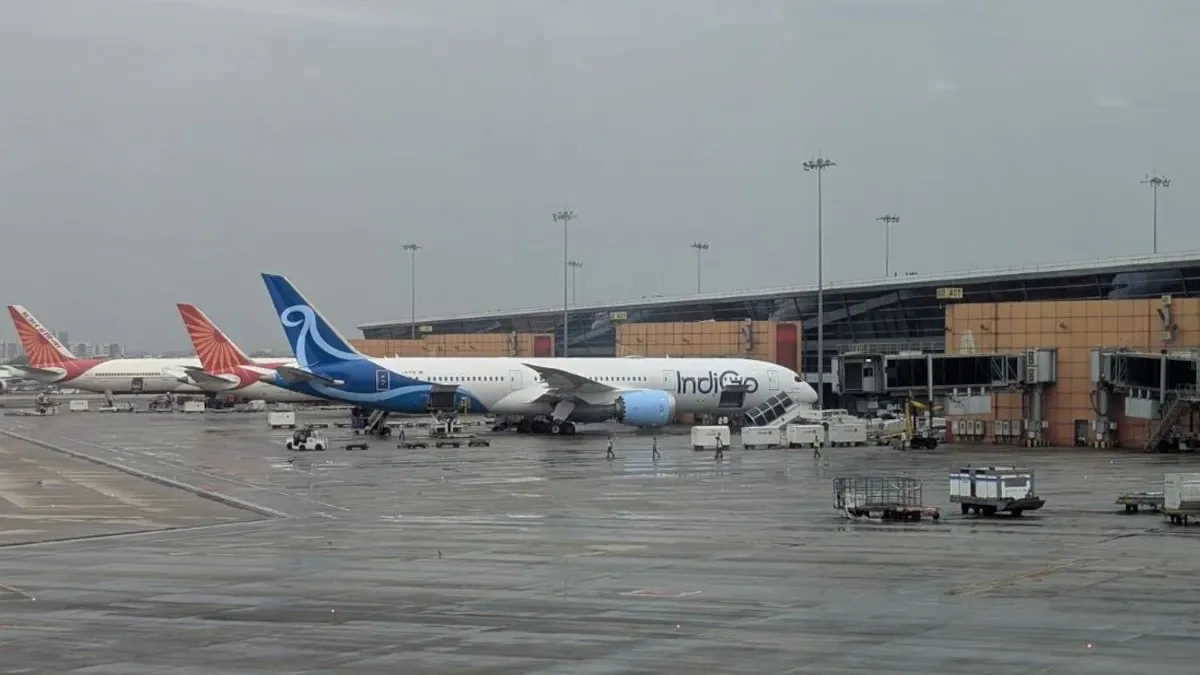
here had been bad weather conditions prevailing in Delhi, with clouds all day until evening when there was heavy rain leading to floods and confusion at the airport.
The storms that came along with rain brought a lot of inconveniences in flights coming to the Indira Gandhi International Airport in Delhi. As many as fifteen flights heading towards Delhi were diverted to other airports due to bad weather.
There had also been flooding in some areas of the city due to the bad weather.
These diversion flights were not arbitrarily placed; there was an order that was determined according to which airport nearby could accommodate them.
Out of the 15 diverted flights, 12 were headed for Jaipur while two went to Chandigarh and one to Lucknow.
It is worth noting that three out of these 12 diverted flights to Jaipur were international flights; thus the passengers were left in a totally different state with no clue of how soon they would arrive at their destination.
It was not mere monsoonal rainfall that posed any problem; the authorities had already issued warnings about it earlier in time.
The areas in Delhi saw rainfall in various regions, where a red warning was issued regarding the high level of rainfall and a yellow warning due to the moderate level of rainfall in certain regions.
In addition to that, the India Meteorological Department also warned of thunderstorms, lightning, and winds up to 40 kilometers per hour — an indication for airlines to ground their flights.
While at the airport, flights were being diverted, Delhi streets were facing another problem altogether in the form of heavy rains.
Roads were moving very slowly on waterlogged roads of the Delhi-Jaipur Highway and National Highway 48 in Gurgaon, along with areas of Sikanderpur Ghosi, Noida, and Faridabad.
It was not just highways that witnessed road traffic congestion, but even other parts of Delhi-NCR had waterlogging and traffic jams at various locations like MB Road, Sohna Road, and Ghaziabad Industrial Area underpass, among others, and a traffic jam of more than 4 kilometres on Sohna Road near Islampur, too.
The rain clouds had covered much more than just Delhi's region, causing concern for the authorities of the neighboring regions who issued warnings.
Noida came under an orange alert and Ghaziabad came under a yellow alert as more rains were expected in Delhi NCR throughout the day.
The impact on Monday's schedules was well reflected in the data on flights tracking.
The delays averaged 32 minutes while 262 flights were either canceled or delayed. The number of flights significantly exceeds the 15 diversions which is an evidence of the cascading impact of one weather phenomenon on the whole schedule of flights for one day.
The major carriers acted quickly to handle passengers’ expectations when it became apparent how big an issue this was going to become.
The guidance of IndiGo, Air India, and SpiceJet to passengers to check for any updates about their flight online before coming to the airport is normal advice that usually doesn’t have to be emphasized outside extreme weather incidents.
The disturbance caused on Monday belongs to a particular trend that has been witnessed through many monsoon seasons at IGI Airport.
It is evident from the fact that just a few months ago during this year, another storm had caused 15 flights to divert, which included eight flights to be diverted to Jaipur, five flights diverted to Lucknow and two flights diverted to Chandigarh — an almost similar magnitude of disturbance as compared to the one observed on Monday, except for the difference in distribution of diversion.
This situation has occurred at Delhi’s airport quite a number of times in past. In April 2024, due to unsuitable conditions of weather, 15 flights got diverted to Jaipur, Amritsar, Lucknow, Mumbai and Chandigarh. It is important to mention here that even in a particularly rough storm of 2014, three parked aircrafts in Terminal 3 got affected owing to strong winds, along with 21 diversions.
This specific pattern of having dense city developments combined with an old drainage system along with monsoons which lead to increased rainfall has resulted in such events happening repeatedly each year.
One such instance, which happened some years back, was when Delhi experienced record 46-year rains totaling to over one meter of rainfall in the monsoon period, and these rains had caused flooding even at the airport's forecourt – showing the inability of its infrastructure to cope up with the amount of water dumped within a few hours.
In light of additional rain expected in the Delhi-NCR area, as well as in some areas of Uttarakhand, Odisha, and Telangana, there are fears of further waterlogging and travel disruptions, and not just the one day problem.
IMD had mentioned that the rain will come down from Tuesday onwards and there were hopes that Monday will mark the peak and not more of a multi-day disruption; nevertheless, with past experience of the monsoon forecast’s reliability in the capital city, everyone is sure to watch out for further developments.