F
or almost two decades, there was one particular theory that had remained unnoticed and hidden on the periphery of astrophysics, and it was considered just a hypothetical speculation until now. But owing to the NASA's James Webb Space Telescope, the theory now has a name, weight, and place in cosmic history.
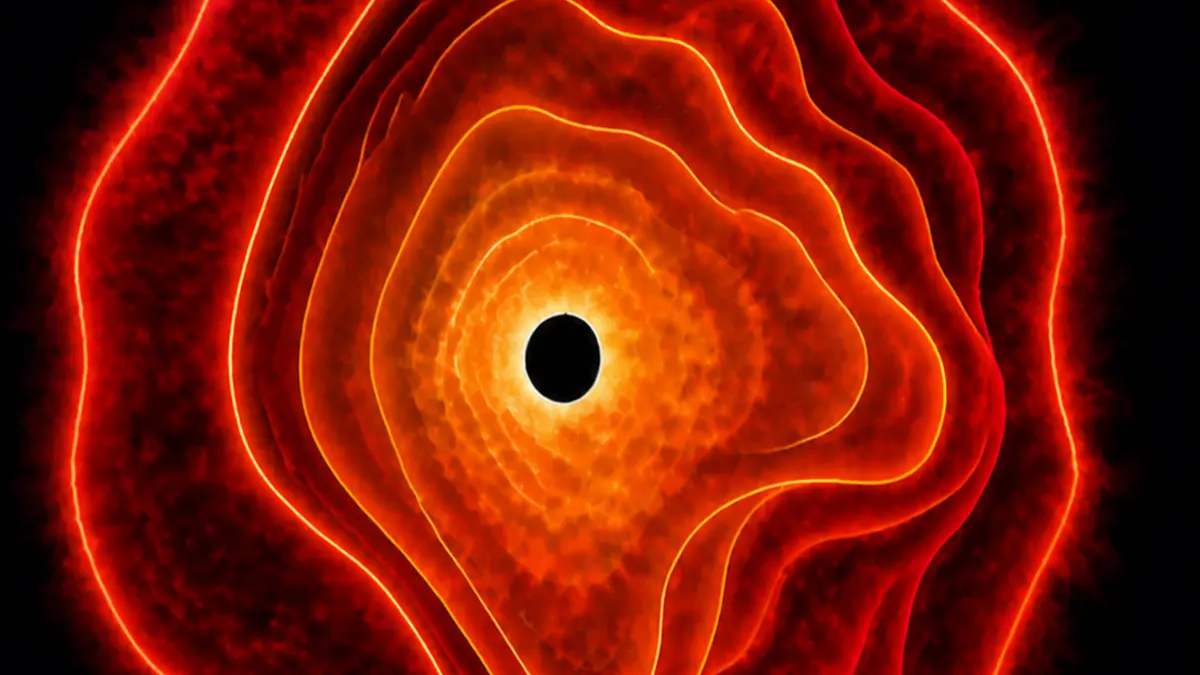
Scientists using the James Webb Space Telescope have identified a new kind of cosmic creature: the "black hole star". The glowing red monstrosity in space has been given the name of MoM-BH* – 1, which has a mass 100,000 times greater than that of the sun and has an enormous cloud of gas surrounding it making it appear like a star that is the size of a solar system. It is neither a star nor is it an ordinary black hole but is something in between both.
The innovation stems from the very mystery that Webb created the moment it turned itself on. It was nearly twenty years ago when black hole stars were first predicted to exist as quasi-stars; but their appearance became of particular interest when the James Webb was first introduced in 2022 and found hundreds of inexplicable "little red dots" across the early universe.
This group of reddish bodies was infuriatingly hard to categorize – far too big to be a star and yet far too dense to be a galaxy. With a black hole at its core, as everyone thought, none of them showed any signs of X-rays that would have been expected from them. It all remained just a theoretical hypothesis until MoM-BH*-1 proved them right.
The reason why this particular discovery could be classified as something really novel is the source of power of the object, which is powering it. Unlike the star whose power comes from the fusion going on in its center, what this object has is a black hole in the center, which constantly consumes matter.
As it has been written in the new paper by the scientists of MIT which describes the findings and was published in Nature, the black hole which lies at the heart of this object produces 100 billion times more energy than the most powerful stars that people know. The researchers explained the physics in very clear language:
black hole stars are a new type of an object, young black holes surrounded by dense gas and producing radiation in a way which makes them similar to stars, with the difference being that the black hole consuming the matter plays the role that the nuclear fusion does in normal stars, while the surrounding dense gas serves as a pseudo-photosphere — the visible outer shell of the star.
Simpler put, the black hole has a thick cocoon of the gas, which radiates as a star would do. Also, it solves another long-term mystery about the discovery—the X-ray problem. It turns out that the gas surrounding the black hole recycles the radiation emitted by the black hole itself, turning it into a star, giving it a distinctive reddish color, and making it produce a very prominent spectral feature called Balmer break, effectively filtering the X-rays coming from the black hole.
The truly astonishing thing about the discovery is the age of this object. MoM-BH*-1 is one of the earliest objects to exist in the universe, having existed in the universe at the time when it was only 660 million years old, since the Big Bang.
The light coming from this object is composed mainly of hydrogen and helium and lacks any metallic content, reflecting the pristine state of the universe when this object was formed, before heavier elements were created by the death of several stars.
The importance of the finding for those who discovered it is in the uniqueness of it itself. As stated by the lead author of the research, the NASA Hubble Fellow and astronomer Rohan Naidu, it is a very special thing to find an object without any kind of precedent, considering all the huge amount of data about billions of stars, galaxies and black holes, which are stored in the archival databases.
What is more, Naidu explained why this particular object became special among all "little red dots" observed with the help of the Webb telescope, mentioning that MoM-BH*-1 has almost completely outshone its host galaxy, giving to see only the black hole star light.
Even the name that they gave to the object shows just how important the team thinks the discovery is. They named it "MoM-BH*-1," with "BH" and the asterisk representing a black hole star and the one implying that the team thinks that there are many more of these objects yet to be discovered. Naidu didn’t mince words regarding the possible meaning behind this discovery.
"Every little red dot is consistent with being a black hole star," he said. That would mean that Webb has not discovered one anomalous object but hundreds of such objects in the last several years without even realizing that they were black hole stars.
This theory also provides a nice explanation as to why we do not have any black hole stars in the current universe, given that it is clear that black hole stars were prevalent in the earlier universe. The reason is that once the black hole begins devouring the surrounding gas, the gas dissipates and hence black hole stars are a temporary phenomenon.
It automatically makes sense that this phenomenon will not be seen often in the current universe, as it would take place billions of years ago and hence the gas that surrounded it would either have been absorbed or swept away.
This discovery is not something that came about independently. Instead, the researchers stumbled upon this while searching for answers to an entirely different mystery. They were searching for information for another mystery, that of the bright galaxies that JWST keeps seeing even at such a young age of the universe. The black hole stars may also hold the answer to this mystery as well.
This discovery gives us a better understanding of how supermassive black holes grew very quickly within the first hundred million years following the Big Bang. Researchers are now speculating that these unique stars are part of an intermediary stage between the formation of these supermassive black holes and our Milky Way galaxy.
Even the scientists who made this discovery do not hesitate to acknowledge that there is much more to be discovered about this phenomenon. “Our view of this object is changing very quickly,” says Naidu, which underscores the fact that MoM-BH*-1 is only the first step towards a whole new science that needs further research and exploration.
Webb continues its work at discovering new objects in the early universe, and the scientists have already started looking for other similar candidates among the numerous catalogued "little red dots."
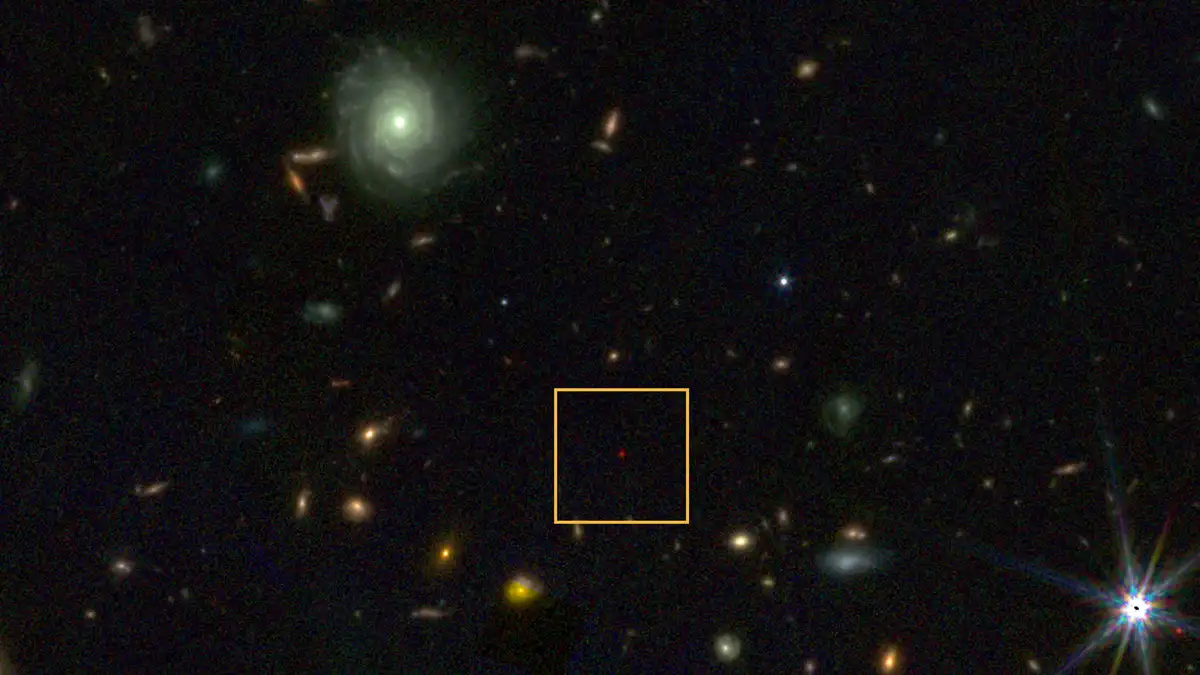
Photo: @Nasa, ESA, CSA, STScI, DAWN JWST Archive