Introduction
T owards late hours of June 30, 2026, the sky over Moscow had yet another burst of fireworks — not of the festive kind, though. As the night ended and the sun came up, the Russian Defense Ministry reported shooting down about 419 Ukrainian drones that attacked Russia overnight in as many as 16 to 18 regions, including occupied Crimea. The targets included Russia’s most vital asset in the country—the Dubna Space Communications Center situated in northern Moscow.
This attack was not an isolated or accidental one.
It was the second time in eight days that the Ukrainian government had hit this particular location, and it is part of an increasing pattern of attacks launched by Kyiv against Russian territory, including oil refineries, military targets, and now important communications centers used for Russian military operations in Ukraine.
What Really Happened
The assault started shortly after midnight local time and consisted of several waves. According to the mayor of Moscow, Sergei Sobyanin, on Telegram, air defenses of the capital have shot down 61 drones flying towards Moscow, stating that it is "another large-scale attack by enemy drones, which was stopped by our air defenses."
The Russian defense ministry, in its update, stated that air defense systems of the country have shot down or destroyed at least 419 drones of Ukraine overnight in the entire country and in Crimea under its occupation—though it is worth mentioning that independent sources, such as the Kyiv Independent, did not manage to verify this number independently.
Ukrainian President Volodymyr Zelenskyy confirmed on social media that Ukraine's long-range forces have attacked the communications center in Dubna, located some 500 kilometers (or 310 miles) away from the Ukrainian border.
It was called a specialized satellite communications facility that serves as a base for intelligence operations and coordination of activities of the Russian troops occupying Ukraine.
It was the second attack on this facility; the first one occurred about a week ago, on June 22, when the staff of Ukraine reported that the strike destroyed a 32-meter communications satellite antenna and the main building of the facility.
The Russian side has not yet confirmed the fact of striking the Dubna center directly, but the governor of the Moscow region, Andrey Vorobyov, admitted that the drone attacked the "administrative building" in the town with no victims being reported.
The Russian state news agency, TASS, described the June 22 attack as a "massive drone strike" and insisted that communications and TV broadcasts were not affected.
Loss of Lives for Humans
Although no loss of life was recorded from the attack of the satellite site, there were some fatalities in other areas during this offensive. There was the death of a six-month-old baby in Yegoryevsk, which is situated 100 miles southeast of Moscow, due to an attack by a drone on a private residence leading to a fire outbreak.
According to Governor Vorobyov, the rescue operation managed to rescue two adults and two children from the debris, although one baby died during evacuation to the hospital. Another two people were also injured.
As per the report by Russian federal aviation authority, Rosaviatsiya, there was disruption at Moscow's Domodedovo and Zhukovsky airports.
Why Ukraine Is Targeting Facilities Like This
Ukraine's military said the strikes on Moscow and even St. Petersburg have become possible thanks to what it called "an open corridor" in Russia's dense air defense network, adding that its forces have been "systematically destroying" radar systems in Russia's Bryansk border region that monitor airspace approaching the capital.
This attack is part of a wider pattern. Just days earlier, Ukraine struck a major oil refinery in the Moscow region—described as one of its largest aerial assaults on the Russian capital since the full-scale invasion began in 2022—with Zelenskyy saying afterward that it was "time the war ended."
Ukraine has increasingly focused its long-range strikes on Russia's oil and energy infrastructure, aiming to squeeze the resources that fund Moscow's war machine. Russian President Vladimir Putin himself acknowledged that a recent refinery strike created a "certain deficit" of fuel and vowed to strengthen protection around such facilities.
Zelenskyy signaled that this campaign is far from over, stating that Ukrainian forces have "already reached four such Russian centres, not only in the Moscow region but also in the Vladimir region," and adding that "relevant actions are also being prepared against other similar enemy facilities."
The Big Picture: A War Entering Its Fifth Year
In statements made on Telegram, the Russian envoy on the so-called crimes of the Kyiv regime, Rodion Miroshnik, stated that the number of civilian casualties from attacks by Ukraine surpassed 300 within a week in the same period for the first time.
However, like other claims made during warfare, this claim is hard to verify. Russian presidential spokesperson Dmitry Peskov described the Moscow region bombings as ones where civilians are suffering and kids are dying.
This overnight attack was not even a rare one. Over the last few days before this attack, specifically on June 26-27, Russian officials recorded 660 Ukrainian drone shoot-downs in two days.
Implications for the Future
To address the increasing attacks of this sort, Russia is allegedly realigning its air defence forces to safeguard important strategic objectives such as Moscow and the crucial Kerch Bridge, which connects Russia and the occupied region of Crimea.
The Ukrainian drone attacks targeting oil facilities have already caused changes to the fuel transportation system in Russia, leading to fuel shortages and queues at gas stations in several parts of the country.
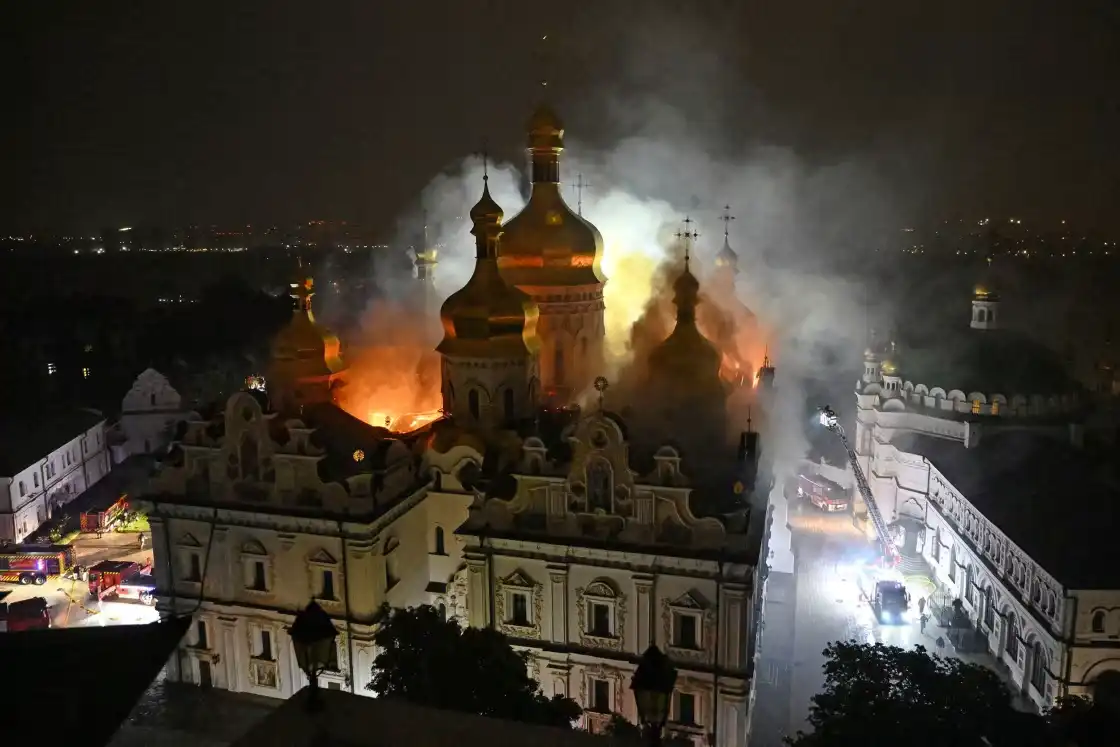
Photo: @Genya Savilov / AFP via Getty Images