A
little more than a week after a sit-in protest involving hundreds of applicants in July in Ranchi's Jaipal Singh Munda Stadium became one of the largest student protests in Jharkhand in recent memory due to just two weeks' escalation.
This Monday saw thousands of applicants aspiring for the Jharkhand Public Service Commission (JPSC) and Jharkhand Staff Selection Commission (JSSC) jobs marching to the State Assembly in a pre-planned gherao as they passed through the police barricades—some of them fortified with barbed wires—and were showered with water cannons and lathicharges and teargas shells from the security forces.
Tuesday saw the demand of dawn-to-midnight bandh by the main opposition party in the state.
The agitation had its root causes in the frustrations among the government job aspirants regarding how Jharkhand's two main recruiting bodies—JPSC which is responsible for the appointments of administrative officers and JSSC which handles general staff recruitment—had been conducting the exams lately.
The reports regarding questions leakage, bias in the examination process, and the selection criteria were surfacing time and again since 2024, but the complaints regarding the alleged malpractice in the 14th JPSC Combined Civil Services Preliminary Exam and JSSC CGL exam were the cause of the present unrest.
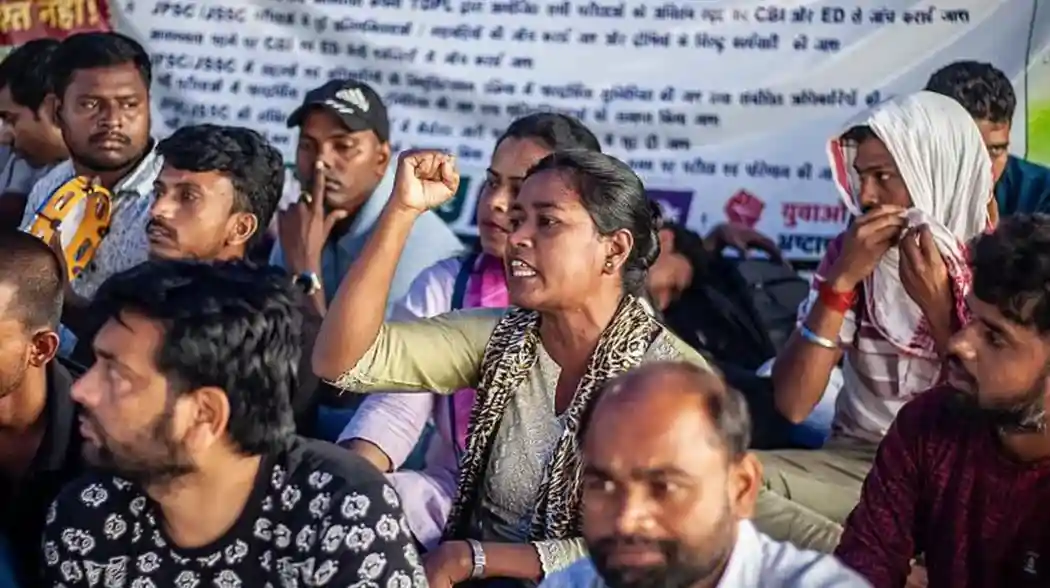
This agitation began with the sit-in of aspirants at Ranchi's Jaipal Singh Munda Stadium from July 29 for a clear inquiry into the matter. The unique aspect of this agitation from others lay in its longevity.
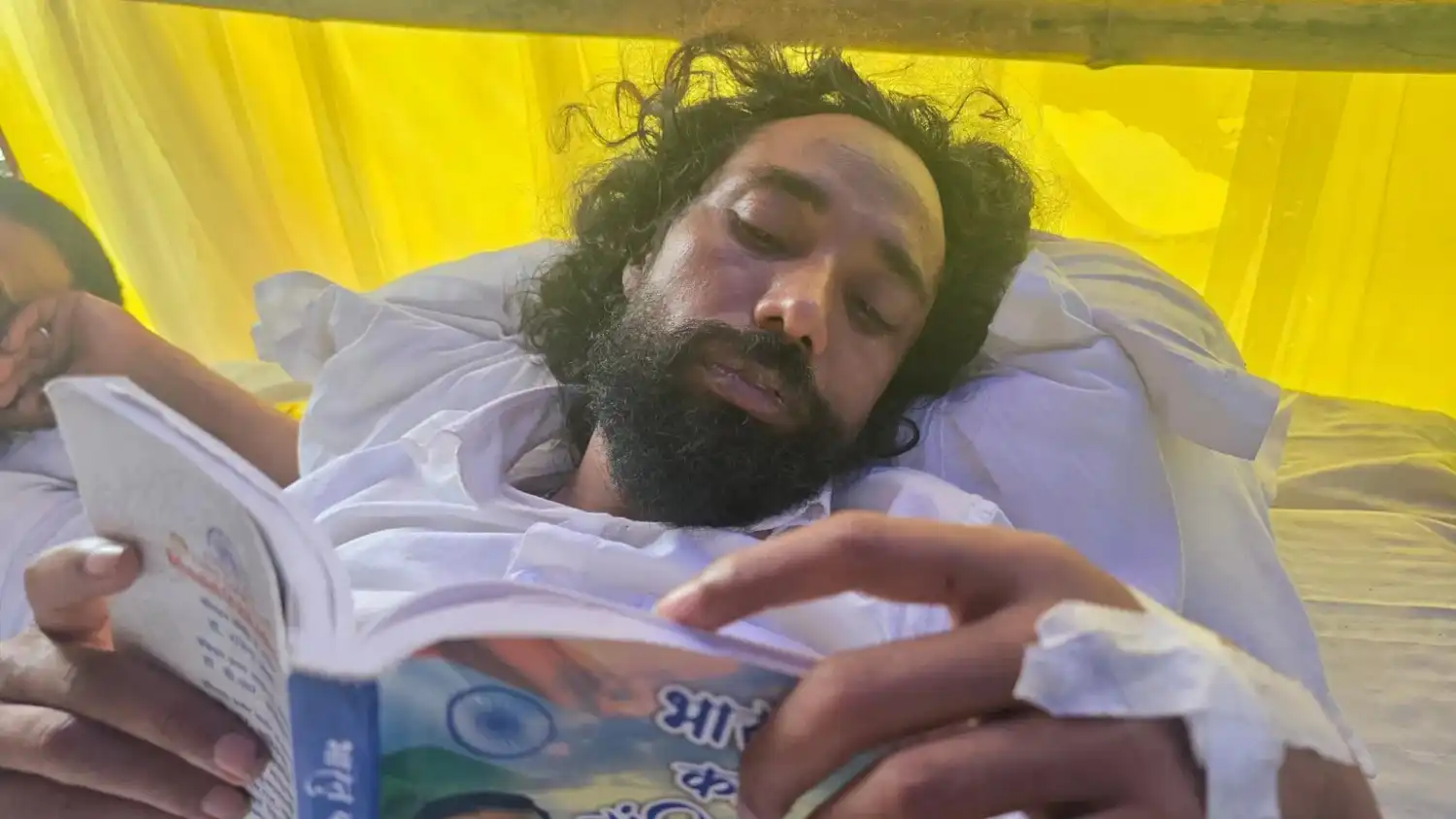
A symbolic focal point of this protest action occurred on August 2 when Devendra Nath Mahto, a student leader associated with the Jharkhand Loktantrik Krantikari Morcha (JLKM) began a hunger strike to support the agitating candidates. Known as the face of similar protests in Jharkhand, Mahto joined the demonstration to walk towards the Assembly and was reported not having eaten for nine days and losing more than ten kilograms of body weight; hence the student leader had to come from the hospital to join other students and leaders of oppositional political organizations.
He added urgency to a series of requests made by protesters who went beyond the stage of just asking for a probe to demand the immediate cancellation of JSSC-CGL examination; besides, they demanded giving the ongoing investigation to the Central Bureau of Investigation and structural reforms of the examinations conducted by commissions.
Protests in Jharkhand escalated dramatically on August 10 when thousands of people attempted a "Vidhan Sabha gherao"—or an attempt to occupy the state's Assembly building amid its monsoon session. The police used water cannons, tear gas and baton charges after people broke the barricade at Ranchi's Albert Ekka Chowk. Students have been alleging that the police action has led to injuries of several hundreds of protesters, which became another focus for the opposition party.
It is noteworthy that the state government decided to use a combination of concessions to protesters and strong measures to counter them. Late on Sunday, the state government accepted the demand of cancelling not only the 14th JPSC preliminary examination but also two backlog recruitment exams; besides, three JPSC board members resigned in the context of the state investigation into the matter.
Moreover, the state's Criminal Investigation Department arrested the former chairperson of the commission, L. Khiangte, for irregularities in conducting the canceled preliminary exam.
The chief minister of the state, Hemant Soren, acknowledging the protesters' grievances, also called on them not to get caught up in an oppositional version of events.
The Monday police action has now brought the protest fully within the ambit of party politics. The Jharkhand State unit of Bharatiya Janata Party led by its state president Aditya Sahu, has called a statewide bandh for Tuesday accusing the Soren government of exercising excessive and unwarranted use of force upon the unarmed job seekers.
Not only is opposition leader Babulal Marandi, but even several BJP MLAs are detained while agitating outside the residence of the chief minister, asking for an inquiry about the violence committed.
The bandh call has excluded essential services and asked for cooperation from Kanwariyas, who are going through this region on their pilgrimage tours in this period.
Also, national-level political figures have entered the debate with the Leader of the Opposition in the Lok Sabha strongly condemning the police actions and saying how the peaceful protests ought not to be suppressed by means of force, which becomes all the more telling in light of the fact that Congress, a member party of the governing coalition in Jharkhand, remains a part of the JMM-led government in Jharkhand.
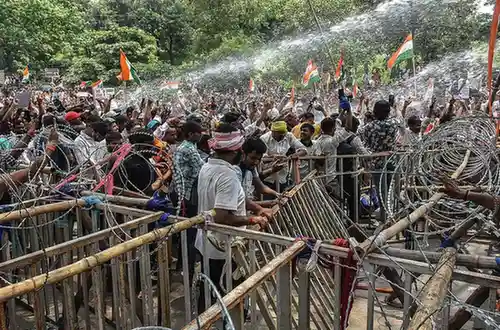
Photo: @AFP via Getty Images