F
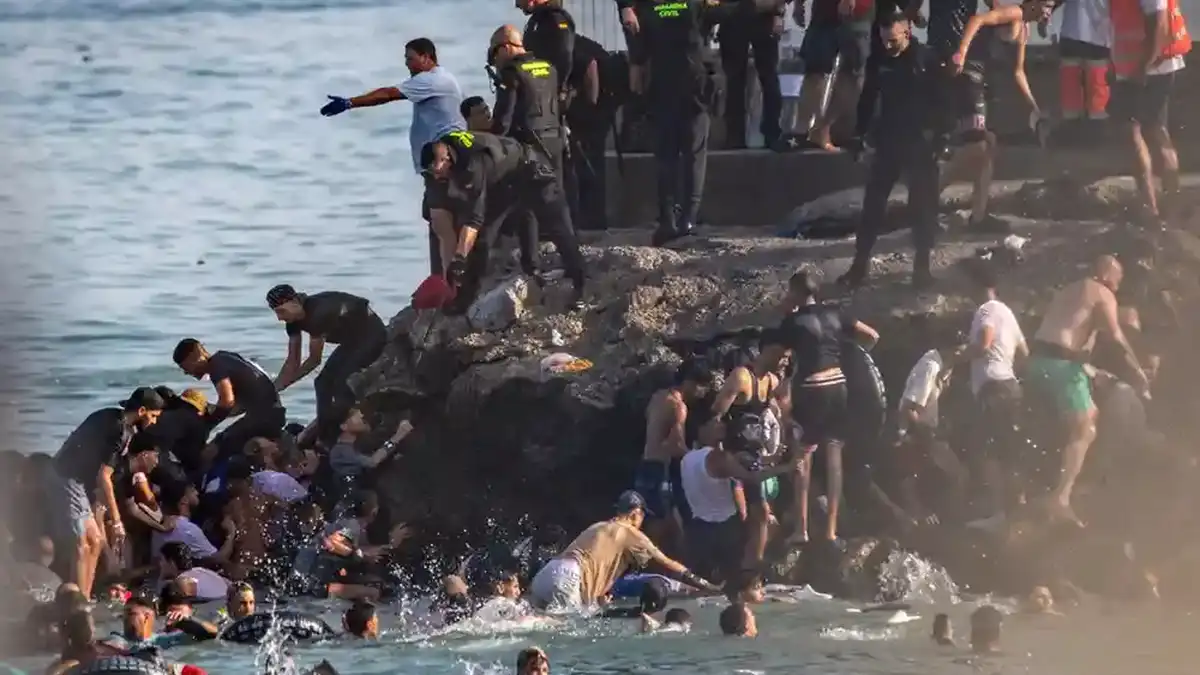
ifty-seven people are now confirmed dead in the Ceuta border crisis. Spanish officials gave the updated toll Friday, alongside a bit of good news, if you can call it that: roughly three-quarters of the tens of thousands who flooded into the enclave earlier this week have already turned back for Morocco.
Numbers this size haven't been seen at Spain's African frontier in years.
Ceuta's regional president, Juan Jesús Vivas, says 60,000 people crossed, most of them in a single day on Thursday. Madrid's own tally is a bit more conservative, around 49,000, which still makes this roughly five times the size of the last major surge, in 2021, when about 10,000 got through. Vivas called it what it looked like on the ground: "a situation of absolute humanitarian and social emergency."
Most swam around the Tarajal breakwater or waded in along the shoreline before sunrise, moving faster than a border post built for ordinary traffic could handle. People drowned. Some were crushed trying to scale the breakwater itself, which is where a lot of Friday's fatalities came from, according to a Spanish government representative cited by Reuters.
On the ground, Rachid Sbihi, who heads a local Civil Guard union, described thousands of people, including unaccompanied kids, sleeping in parks and on sidewalks because there was nothing else for them.
Ceuta has about 85,000 residents. It was never going to absorb tens of thousands more overnight, and city officials said so plainly: there wasn't food or shelter for that many people, and there still isn't.
Here's the legal detail that set this off. On June 29th, Spain's Supreme Court ruled that migrants arriving by sea can't be summarily deported without due process, because swimming or wading in doesn't count as crossing the physical border infrastructure Spanish law actually refers to. Climbing the fence, on the other hand, still gets you an immediate return.
Prime Minister Pedro Sánchez cut short other plans to fly down to Ceuta himself.
His explanation: trafficking networks took that narrow ruling and blew it up into something it never said, telling people that reaching Spain by water now meant they couldn't be sent back.
He said the claim "spread like wildfire" through smuggling circles in the hours before Thursday's rush. Not everyone buys that version. Some activists in Morocco have pointed out that most people making a dangerous swim across a militarized border probably aren't checking court rulings first.
Either way, Sánchez already has an answer lined up: floating barriers in the water, meant to let Spain resume immediate returns without running into the same legal wall.
By Friday evening, Spain's Interior Ministry put the number already returned to Morocco above 37,500, about 75 percent of everyone who'd crossed. A lot of that was voluntary.
Once people realized there was no food or shelter waiting on the other side, plenty just walked back. Madrid says an agreement with Rabat helped speed things along, and it's thrown extra Civil Guard units, divers and Maritime Service boats at the effort.
This didn't stay a Ceuta problem. Italy put temporary checks back up on travel from Spain. France did the same at its own border, and Interior Minister Laurent Nunez said police numbers there would be quintupled by Saturday, with more aircraft in the air watching the crossings.
The EU's home affairs commissioner, Magnus Brunner, called what happened in Ceuta "unacceptable" but pushed back hard on any suggestion that migrants were moving further into Europe. "There are no movements taking place towards the European continent or towards other Member States," he said.
Vox leader Santiago Abascal accused Sánchez of engineering the whole thing to boost himself politically, which is the kind of claim that gets made and doesn't really get answered.
More grounded analysis points somewhere else: youth unemployment in Morocco, among 15 to 24 year olds, is still at 37.2 percent, even with the national rate down to 13 percent. Spain's economy, by comparison, is doing well.
That gap doesn't close because a court in Madrid issues a ruling.
Border guards have mostly stopped new crossings for now, and most of the people who came in on Thursday are already gone. Officials still won't call the death toll final. And the argument over what that June ruling actually allows, who twisted it, and what happens the next time someone tries this, hasn't gone anywhere.
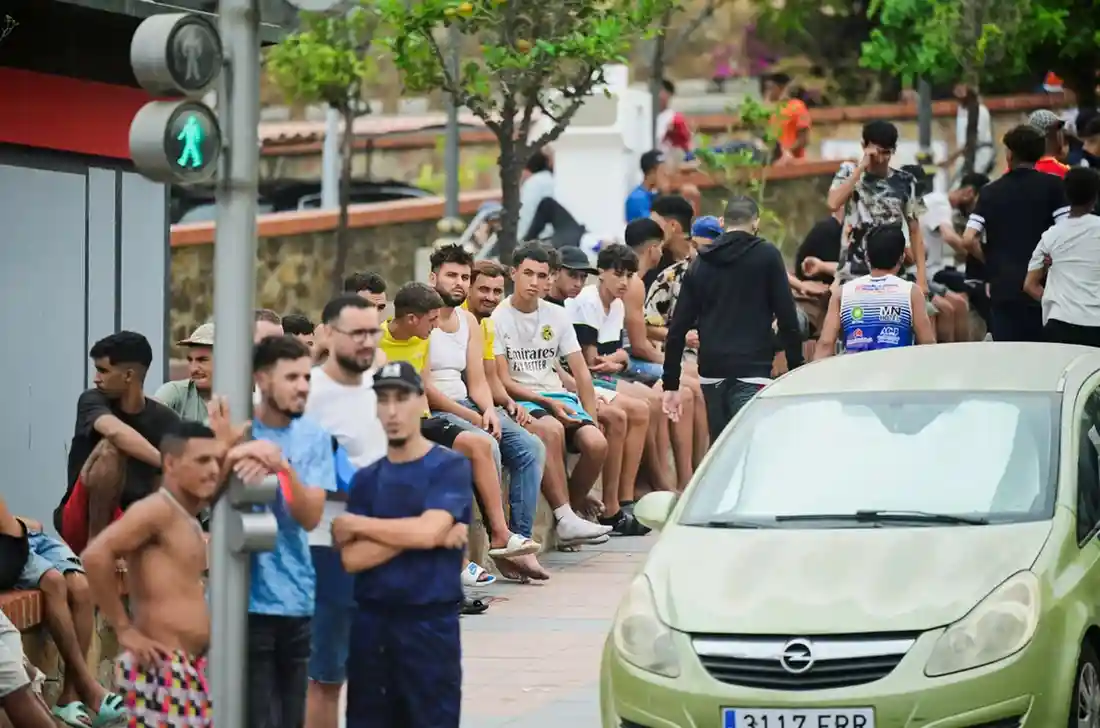
Photo: @Fabian Bimmer/Reuters