S
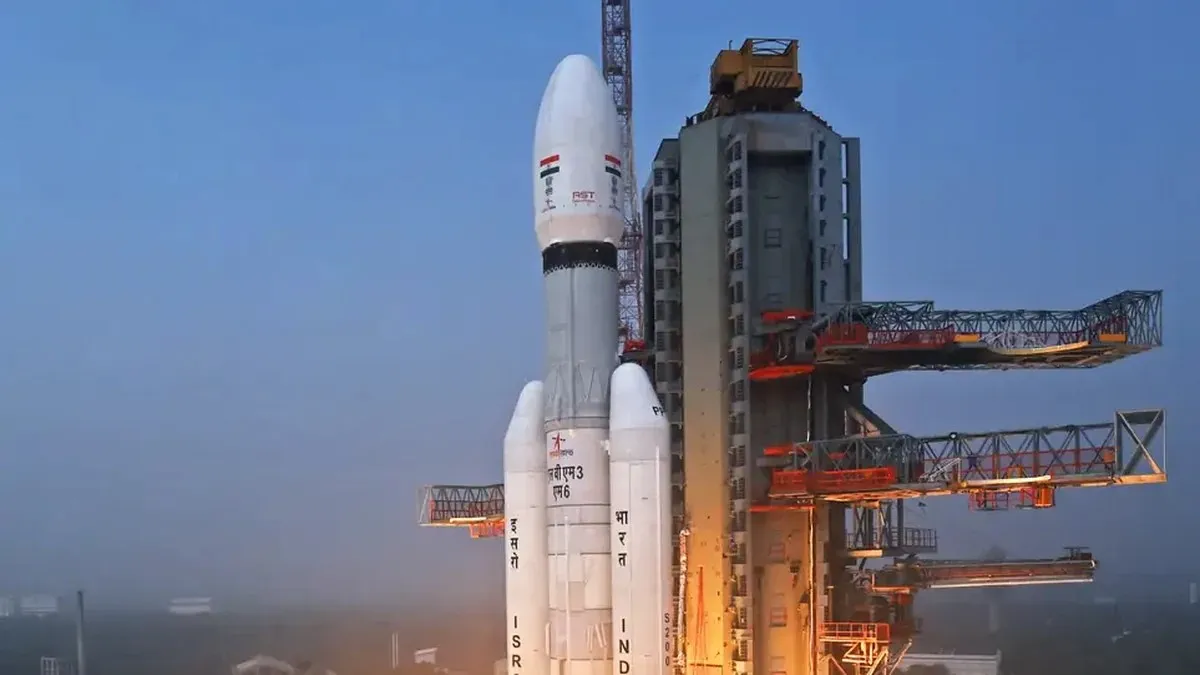
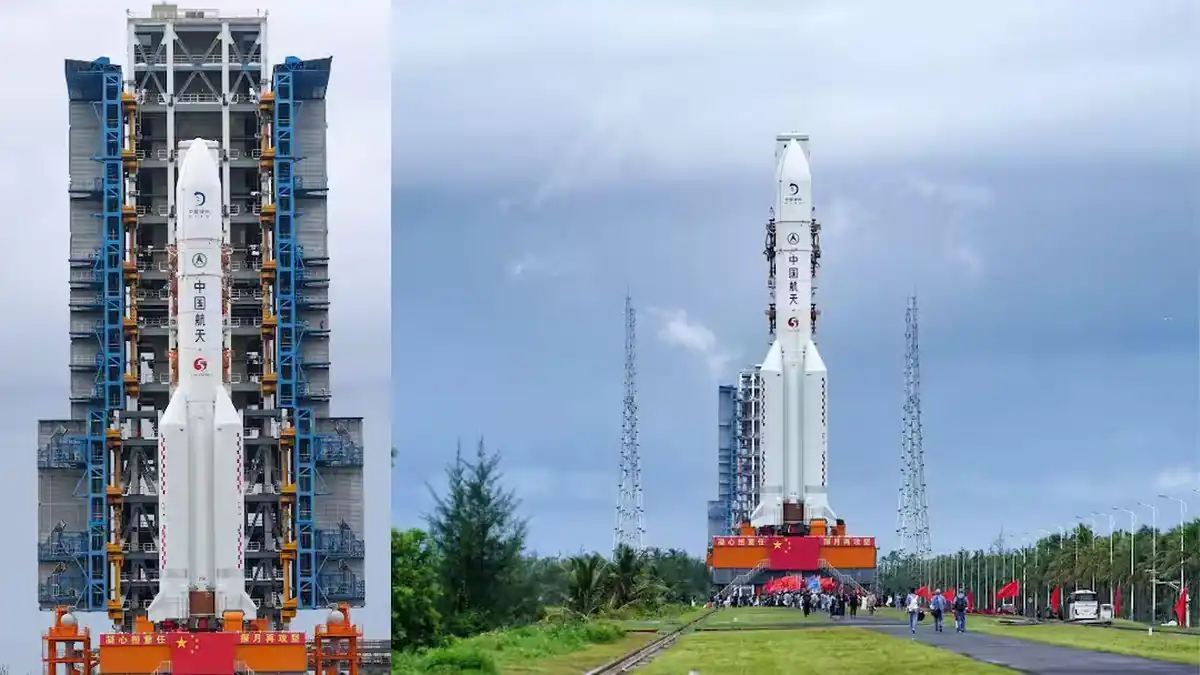
ometime between August 24 and August 31, a Long March 5 rocket will lift off from the Wenchang Space Launch Site on Hainan Island. Officials in Beijing are already calling it the most complex robotic lunar mission ever flown. Not a smooth plain. Not a scenic ridge. The target is a crater so deep its floor has sat in total darkness since before humans figured out fire.
The mission is Chang'e-7, named after the goddess who supposedly flew to the moon and never came back. This time the goal is a lot more practical. Is the moon hiding enough water to keep astronauts alive one day? And if so, how much, and how deep down?
This isn't one spacecraft. It's four, stacked together, each with its own job to do. An orbiter maps the surface and relays data home. A lander attempts a touchdown accurate to under 100 meters, tighter than anything China has pulled off before, aiming for the rim of Shackleton Crater. A rover rolls out afterward to sample soil in the sunlit patches nearby.
Then there's the hopper. Six legs, built to leap rather than roll, because wheels are basically useless once you're inside a crater where the sun literally never reaches. And that's the interesting part of this whole mission, honestly. Permanently shadowed craters near the lunar south pole sit at temperatures barely above absolute zero, cold enough that any water ice deposited there over billions of years, whether from comet strikes or solar wind, is probably still sitting exactly where it landed. Untouched. No wheeled rover has ever driven into a place like that. China's hopper is supposed to jump in, take a reading with its water-molecule and hydrogen-isotope analyzers, then jump back out before its batteries give up.
None of it happens fast. After launch, the spacecraft needs six to eight days just to reach lunar orbit. Then months more of observation passes to check the landing zone for boulders, slopes, anything that could wreck a touchdown. A landing attempt is expected around November, if all goes to plan.
We've suspected for close to two decades that the moon has water in some form. What nobody's confirmed yet is how much, where exactly it sits, or whether it's even practical to dig up.
"There has never been a landed mission to find water" on the moon, Norbert Schorghofer, a senior scientist at the Planetary Science Institute, told Scientific American. If Chang'e-7 pulls this off, he added, China becomes the clear leader in lunar science, a title that's arguably belonged to nobody since Apollo.
That's not a small claim. Water ice on the moon can be split into hydrogen and oxygen, meaning it could eventually fuel rockets or supply breathable air for a base. China has already committed to landing astronauts by 2030, and whatever Chang'e-7 turns up at the south pole will help decide exactly where that mission, and a planned International Lunar Research Station, ends up going.
For a mission wrapped in this much national pride, Chang'e-7 is surprisingly international. Egypt and Bahrain built a hyperspectral camera together to study surface composition from orbit. Thailand sent a particle detector, its first piece of hardware to ever leave Earth orbit. Switzerland contributed a radiation spectrometer. Russia's Academy of Sciences is sending instruments to study lunar dust and plasma. Italy built a small laser reflector for precision distance measurements.
There's also a telescope on board developed with the Hawaii-based International Lunar Observatory Association, which is a little unexpected given how tense U.S.-China relations have gotten lately. All told, six countries plus one international organization contributed instruments, which China's space agency frames as groundwork for even wider cooperation on its next mission, Chang'e-8.
NASA's own plan to return to the lunar south pole, Artemis, keeps slipping its timeline. Chang'e-7 doesn't cancel that competition out. If anything, it sharpens it. Whoever maps the moon's accessible water first gets real say in where future bases, and future resource claims, end up.
For now none of that's settled. What's actually locked in is a rocket, a launch window opening this week, and a six-legged robot heading somewhere nothing has gone before. Into the permanent dark, hunting for ice that's been waiting billions of years to be found.