I
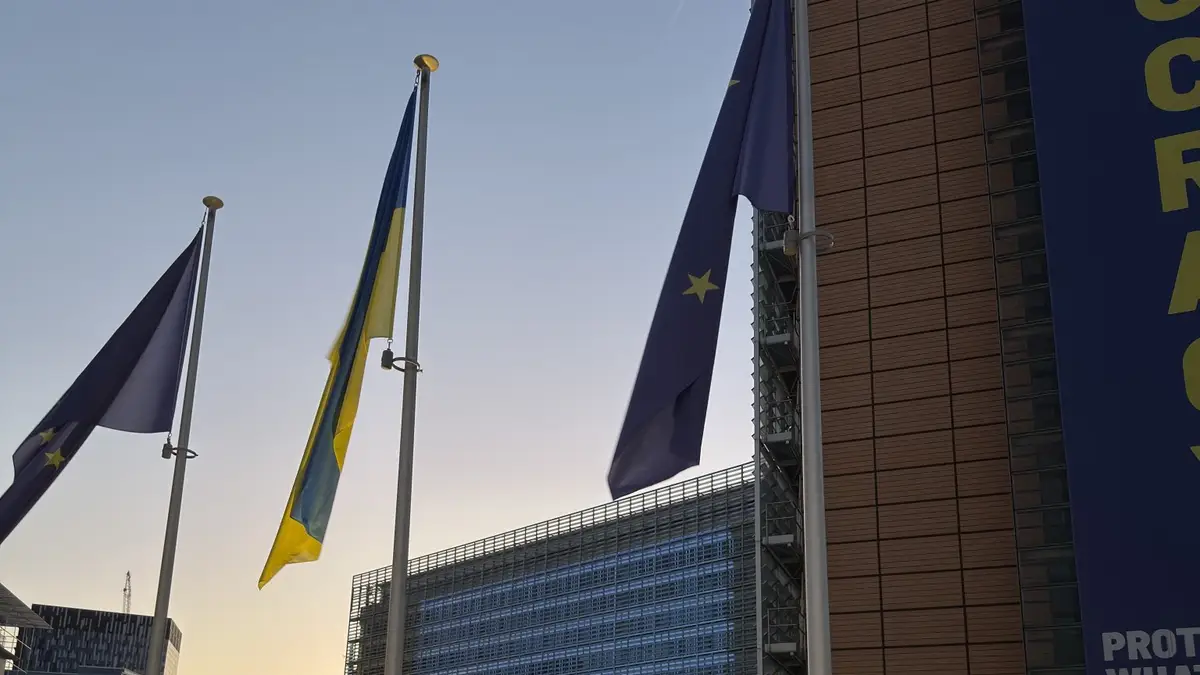
n fact, The European Commission recently announced the release of its new set of funding worth 6.1 billion Euros ($7.12 billion) in order to assist Ukraine in acquiring such defensive equipment as air defenses, missiles, ammunition, and radars.
It is clear that the aforementioned news appeared just before the arrival of the European politicians to Kyiv, where the celebration of Ukraine’s Independence Day (observed on August 24, 1991) took place.
Two factors of the current situation were noted by Ursula von der Leyen, the President of the European Commission.
"During the Independence Day of Ukraine, we show our solidarity,"
"Today, we have committed to €6.1 billion for air and missile defense systems, missiles, ammunition, and radars that Ukraine urgently needs," Ursula von der Leyen posted on X.
Afterwards she continued with an even more comprehensive message: "As Russia steps up its attacks, Europe is responding to help Ukraine defend its people and skies. Europe stands by Ukraine, and we will provide what it needs and when it needs."
Not all the money was spread evenly among different categories; rather, it is targeted for a particular need.
Ukraine has identified air defense systems as its greatest need in light of the constant missile strikes from Russia and the dwindling stockpile of Patriot missiles.
It can be noted that the number of bombardments justifying such a great need is huge. Indeed, in July alone 376 strikes were registered by the European Union Commission, which published an independent statement.
Monday's decision was not an isolated act; rather, it was a chunk of a much bigger financial deal that has been agreed upon beforehand.
The deal refers to a €90 billion loan, including 60 billion euros in defense assistance, which will be provided by the EU to Ukraine. Out of this amount, 16 billion euros were already allocated prior to Monday, and 8.5 billion euros were already transferred to Kyiv.
By adding Monday's €6.1 billion deal, it appears that Ukraine received about €22 billion out of €28.3 billion it should have received in the current year 2026 for its defense expenses.
The package announced Monday follows right up on plans which were already well under way in the pipeline.
The EU stated that the latest aid package was in addition to €16 billion worth of previously authorized procurement plans, out of which €8.35 billion had been delivered, thus the new fund was meant to increase the current process, not replace it.
The process behind the headline figure is an ongoing process whereby funds are allocated to particular requests for equipment.
Mykhailo Fedorov, the outgoing Defense Minister, presented nine product schedules – shopping lists for defense equipment - in the closing days of his term before the European Commission for their stamp of approval.
Out of the nine lists, seven have been approved, according to a top EU official, making the tally of approved product schedules 11. There are two more lists out of those submitted by Fedorov that are pending, and there is one list that involves the purchase of further equipment and is awaiting final approval.
This is because the importance of the EU’s involvement stems from the fact that there has been a major change in the source of funding the war effort in Ukraine.
While the US government has ceased almost completely to provide any kind of military aid to Ukraine due to the policies followed during the Trump presidency, the European Union has come up as the top military donor for Ukraine through its lending system.
The latest injection of €6.1 billion on Monday is only another stage in the financial commitment made which has seen a huge increase since the Russian invasion started.
In the early stages of the provision of funds to Ukraine, the figures were smaller compared to the current scenario – way back in July 2022, the union agreed on tranches of just €500 million each time, making the total of €2.5 billion after five different rounds of funding.
However, by the year 2024, there was a great difference in terms of the amounts, where the European Council decided to inject €5 billion to help out Ukraine’s armed forces in particular through a fund for assistance.
Finally, in February 2026, the European Parliament approved the entire loan package of €90 billion, with €30 billion going to macro-financial and budgetary support while the rest goes to defence capability acquisition.
Looking even broader, Monday’s donation is part of an even bigger total that the EU has managed to pool since the start of the conflict.
Since the beginning of the Russian invasion, the EU and its member states have pooled €69.7 billion in military aid to Ukraine, of which €6.4 billion has been provided specifically through the European Peace Facility system.
However, the EU has not just been providing money but has also been strengthening the capabilities of Ukraine itself - the EU Military Training Mission for Ukraine, which cost €362 million, has already trained 86,800 Ukrainian soldiers, while European defense companies have increased their ammunition production capacity by 40%.
It is evident that there is a clear message in the choice of timing of the announcement on Monday when European leaders were meeting in Kyiv to celebrate Independence Day, instead of another day of the year.
The fact that Ukraine's Independence Day was chosen as the day to make an official announcement regarding the approval of billions of dollars in new air defense funding gives European leaders the chance to give a gesture of support together with an immediate financial commitment.
Considering the seven of nine original lists of procurement by Fedorov have been approved and only two left pending, the following weeks should give clear indications on which other defence systems would be purchased with this latest tranche.
Seeing that about 78% of 2026's total committed EU defence spending for Ukraine is already assigned, it will be interesting to see how the remaining amount will be distributed until the end of this year – especially with Russia continuing its missile attacks, reaching a new record of 376 strikes in one month of July.