W
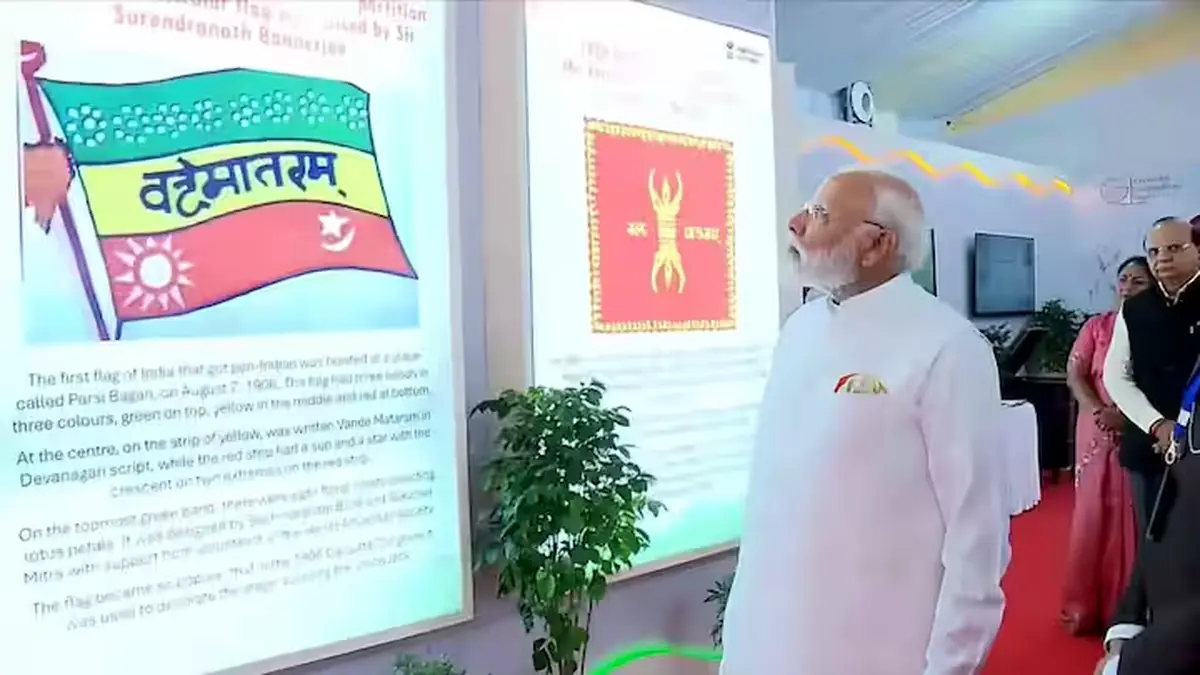
hile the National Song Vande Mataram was being performed live for the first time in the history of this occasion on Saturday morning, a much more ambitious idea was delivered in a speech that largely comprised a bigger statement—that India doesn’t need the whole world anymore for its energy needs and advanced technology.
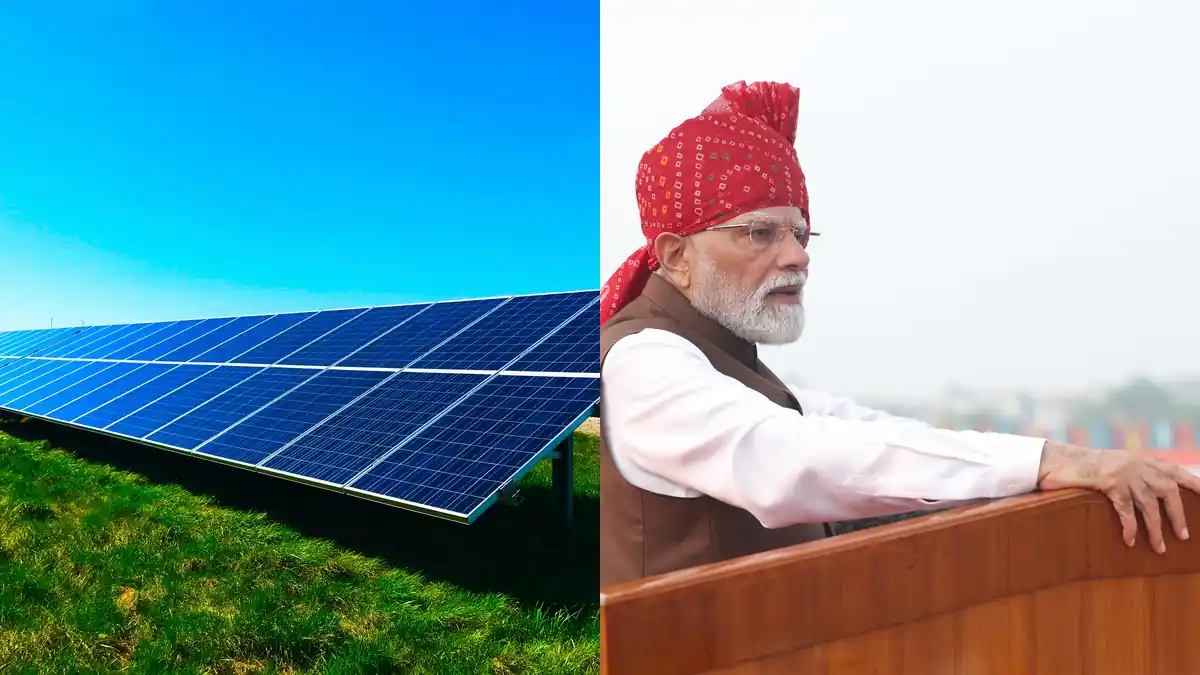
Delivering his speech from the ramparts of Red Fort on the occasion of India's 80th Independence Day, Narendra Modi made it clear how India has to face its growing energy needs, which can be only met through use of solar energy.
The figure Modi used to define India's energy strategy in terms of numbers was a rather straightforward one. Prime Minister Narendra Modi claimed that India managed to grow its solar energy production by an impressive eighty times from merely 2 GW of 2014 to 160 GW today.
It's a number that can be used not only in press articles but also on WhatsApp, since India that had almost no solar energy production ten years ago now uses it in amounts equal to the whole national grids elsewhere in the world.
Modi didn't confine himself to the praise of already achieved success.
He had set a tough target for India to produce 500 GW of renewable energy within 2030, which suggests that India has to increase the production of renewable energy thrice in less than four years. To explain the necessity of such growth, he related the goal to the technology revolutionizing the global economy: "Building a new world is difficult.
That is why, whether it is a chip, AI, or data center, we need huge amounts of electricity. The new era requires energy," said Modi at his speech in front of the Red Fort.
Clever listeners of Modi’s previous Independence Day speeches will certainly find something intriguing regarding the "80-fold" number—it is an inflated version of the previous year’s statement on the same subject.
As recently as the previous year, in his 79th Independence Day speech, Modi noted that the capacity of solar energy had seen a 30-fold increase within the past 11 years. In September 2024, two years ago, when addressing the attendees of the International Solar Festival, Modi stated that the capacity of solar energy in India had increased 32-fold in the last 10 years.
The fact that the number has increased from "30-fold" to "80-fold" is due to a fast capacity increase in the period between these events.
Whereas the solar stat was surely the one most likely to see a trend emerge, it was presented as merely one plank among many in a far more expansive platform. The themes that emerged as some of the most important in the speech included semiconductors production, critical minerals and energy security, and the PM's announcement of growth in nuclear power, piped gas, railway electrification, hydrogen tech and indigenous mining of minerals. These efforts have been explicitly connected by Modi to the government's pet initiatives like Atmanirbhar Bharat, Make in India and Vocal for Local, emphasizing the importance of an industrial ecosystem within the country to create the vision of a Viksit Bharat or "developed India" by 2047.
That theme was anything but subtle, and the PM himself informed his audience that India cannot rely forever on other nations for critical tech, materials, and energy.
Solar energy was not in isolation during Modi’s energy vision since nuclear energy too was allotted a separate headline-based goal, which is a reiteration of his promise made a year ago. During his last speech, Modi had revealed that India is building 10 new nuclear reactors very fast and promised to expand nuclear energy capacity ten times more by 2047, but at the same time admitted openly that India is very much dependent on other nations for its energy requirements, whether it is petrol, diesel, or gas, and spends huge money importing them.
The current speech is an extension of the last one, and the different forms of energy have been seen as parallel approaches to the same self-reliant policy.
Interestingly, Modi did not begin with the facts about energy nor with the slogan of self-reliance.
Prime Minister Narendra Modi started his speech on Independence Day 2026 by extending sympathy to all those families who have suffered due to floods, landslides, and various kinds of natural calamities in India—which is quite an important point given the Chamoli tunnel disaster and other natural disasters in the past few weeks.
After that, he went on to speak about "Every heart is Tiranga, every household is Tiranga."
The increase in solar power capacity by eighty times has more than symbolic value—it has serious practical implications for how India will fuel its operations from AI centers to EV charge stations and semiconductor plants that Modi talked about in the same sentence.
India's green energy aspirations have always been monitored very closely by international climate watchers because of India's unique position of having both one of the largest greenhouse gas emitters on the planet and one of its most rapidly developing economies.
Meeting the 500 GW target by 2030 would be among the most ambitious projects in building renewable energy facilities ever tried by any major economy in the 2020s—while failing to meet it, in light of how many times Modi stated it publicly, will have serious political consequences.