T
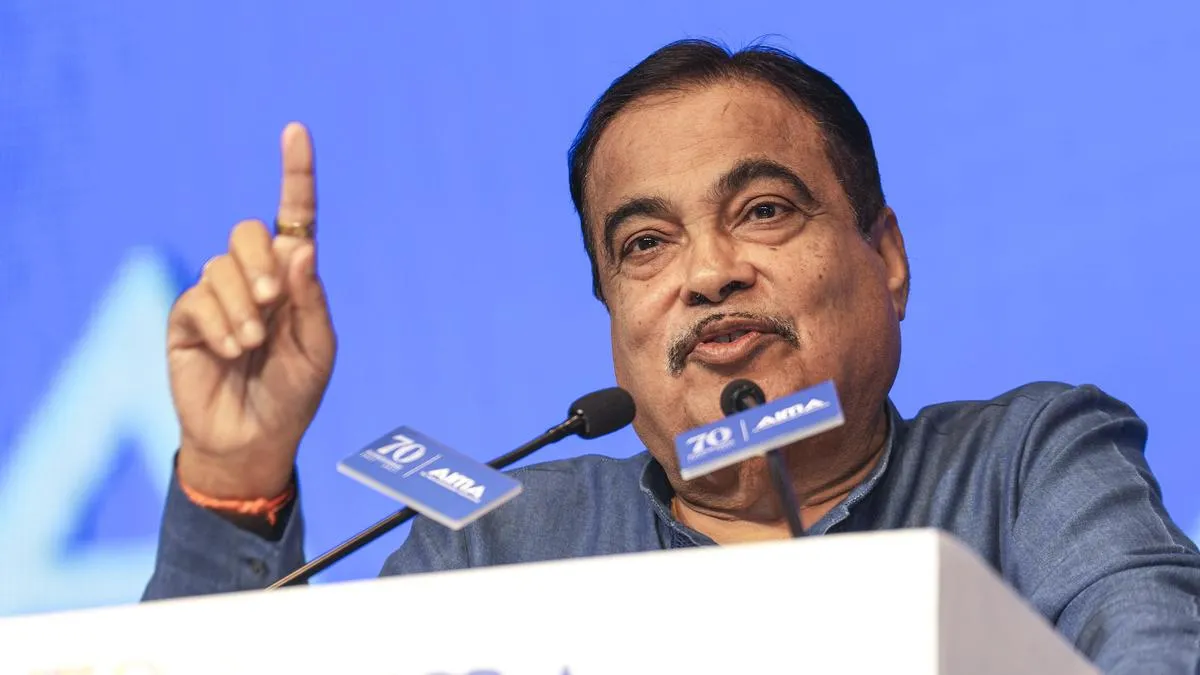
he Union Minister for Road Transport and Highways Nitin Gadkari has been a staunch advocate for the government's ethanol-blending program, stating that while people do not need ethanol-blended fuel, they have an option to buy pure petrol fuel but at an increased cost.
As part of his interaction with The Times of India, Nitin Gadkari made it crystal clear that the era of E10 has come to an end in India, as India has already managed to blend ethanol by 20% and the regular fuel being used in India is now E20.
This statement comes in the backdrop of increasing anxiety among the masses regarding the E20 mandate. The issue of the impact of E20 fuel on car engines and the feasibility of older cars, which were never designed to run on ethanol-based fuel, has raised doubts among various stakeholders.
The minister was unequivocal in his refusal to accept the notion that E20 causes damage to engines, dismissing such suggestions outright as being based on misinformation.
He stated that the government had made a specific call for citizens who faced problems using the fuel to write to them, and up to now, no complaints have ever been received from any citizen. He highlighted the example of automobile company Maruti Suzuki which came forward in support of the fuel, stating that the companies continue to give their regular warranty on cars even those fueled with E20. Moreover, he said that those criticizing the scheme do so not due to any technical issues but for political reasons, and some people are targeting him and the government too.
Although he rejected arguments about mechanical damage to the car engines, Gadkari admitted one technical fact that the calorific value of ethanol is less than pure gasoline, which results in a slight decrease in fuel efficiency. He mentioned that this impact is negligible during normal city drives in cities such as Delhi and Mumbai, wherein there is a lot of stop-and-go driving due to traffic conditions, but he admitted that the impact will become more evident at faster speeds. In addition, the Ministry of Petroleum and Natural Gas has recognized that E20 may cause a reduction in miles per gallon (MPG) by up to 5 percent for certain automobiles; however, it argued that the fuel is cleaner and more efficient.
The premium value associated with unblended fuel is anything but negligible. Based on information on the current market scenario, it is observed that the variants of unblended fuel, which are known for their premium quality such as 100 octane grade fuels like XP100 and Power100 targeting luxury cars and superbikes, need to be processed through more sophisticated refineries. This leads to the cost of these fuels being priced around 167-170 rupees per liter in large metro cities, amounting to a premium of about 60 percent on regular ethanol-blended petrol.
When asked if it is possible for filling stations to offer alternative fuel dispensing options with varying amounts of ethanol blends from which customers can select their choice, Gadkari dodged the question and said that it depends on the Ministry of Petroleum and Natural Gas rather than on his ministry.
However, Gadkari made clear that there was already an option of E85, an 85 percent ethanol fuel blend, which flex-fuel vehicle owners can use at present, and added that over half a dozen automobile makers were planning to introduce their flex-fuel models able to run on such fuel.
What is more, Gadkari emphasized that E85 was even cheaper than E20. From its side, the Ministry of Petroleum and Natural Gas refused to support the idea of keeping two parallel fuel lines at conventional retail gas stations because of logistic difficulties and investments required for their installation.
Gadkari has even taken the opportunity provided through this interview to counter claims of conflict of interest made against his family's business dealings in the sugar sector.
It must be noted here that sugar cane is one of the main raw materials for ethanol. Gadkari has made it clear that the family sugar business operates under the control of his sons, while ethanol programme is managed by Ministry of Petroleum & Natural Gas and its price is set by the union cabinet.
Besides the controversy of the safety of engines and the higher costs of fuels, Gadkari argued that ethanol blending was part of a larger strategy to reduce the dependence of India on its crude oil imports and to control air pollution caused by vehicles. He stated that there are other sources apart from sugarcane, such as corn, rice, farm waste, and even bamboo, to produce ethanol. To be more precise, he highlighted that ethanol made out of corn has provided extra money to the farmers of Bihar and Uttar Pradesh, ethanol is being produced from paddy stubble at a plant in Panipat to reduce air pollution in Punjab and Haryana, and ethanol made out of bamboo in Assam.
Moreover, the government cited some substantial benefits to the economy in terms of forex savings as a result of replacing imports of crude oil with locally available biofuels to the tune of 1.97 lakh crore rupees. Further, he compared it to some other nations that have successfully adopted ethanol-blended fuels, such as Brazil, which has been using ethanol-blended fuels for decades without causing any damage to the engines, while Indonesia and Thailand are doing the same in biofuel projects.
The Ministry of Petroleum & Natural Gas has also come out with an elaborate multi-point explanation regarding the various issues associated with E20.
This includes issues related to engine damage, consumption of water in making ethanol, car warranties, fuel efficiency, and environmental issues.
The Ministry has always insisted that the E20 scheme is based on scientific research, safety measures, and experience gained through many years of mixing ethanol with fuels abroad, even while facing opposition from certain vehicle users and political parties.