M
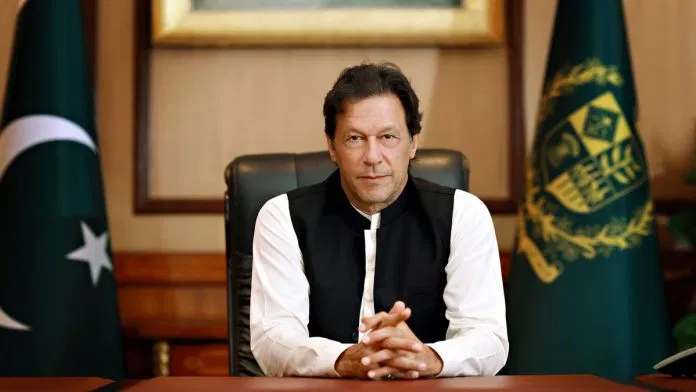
onths of struggle by Imran Khan’s family and political party culminated in this very situation.
Imran Khan, who served as the Prime Minister of Pakistan, was found to be medically fit and transferred back to jail by a group of doctors at the hospital where he was admitted overnight, according to the information minister of the nation on Friday. This is because his supporters did not anticipate this meeting to be so brief.
Pakistan Tehreek-e-Insaf, his political party, did not waste any time in replying. The Supreme Court order made previously was flouted.
Three days before the actual incident, there was a directive that Pakistan's PTI party had been calling for quite some time.
Supreme Court of Pakistan had instructed that Imran Khan should be shifted from Adiala Jail in Rawalpindi to the Shifa International Hospital in Islamabad within two days, a directive that had been requested by his party quite a while ago.
The Supreme Court did not only instruct this but went on to direct that a medical committee be formed for Khan's treatment, which included his sister, Dr. Uzma Khan and his personal doctor, Dr. Faisal Sultan.
It also directed that his family members be allowed to visit him during his stay at the hospital, something that PTI would soon complain about.
And that’s when the first gap emerged between what was ordered by the court and what was done.
According to a spokesperson for the government, Khan was taken to a government hospital due to the “security situation” instead of being brought to the Shifa International Hospital as specified by the Supreme Court.
Khan was shifted from Adiala Jail in Rawalpindi to the government hospital known as PIMS Hospital on Friday morning, where a medical examination was done owing to his deteriorating health conditions.
This shift from the specified private hospital to the government hospital is just one of those instances mentioned by PTI as violating the Supreme Court’s order.
It was not an immediate decision; instead, it followed almost a year of growing concerns regarding Khan’s health.
According to reports from Al Jazeera, the decision by the Supreme Court was almost one month after the initial concern regarding Khan’s blood pressure. However, the underlying health concerns date back quite far.
Back in February, a lawyer appointed by the court reported that the health authorities had left him with only 15% vision in his right eye because of their negligence over three months; it was the reason why the court ordered the establishment of the medical board to examine his eyes.
As mentioned by Bloomberg, the recent order by the Supreme Court included treatment of the health issues, including the problem with Khan’s eyesight, among the causes of his transfer to the hospital.
However, when Khan finally arrived at the hospital, the medical assessment proceeded swiftly.
It took six specialists doctors to determine that 73-year-old Khan could continue being in custody, thus bringing to an end his temporary stay at the hospital under orders from the Supreme Court.
The medical clearance itself, for a health problem that took almost a year to get him into the hospital through protests and court battles, was done in a few hours — which is a speed that PTI’s followers will not view as mere coincidence.
The detention of Khan dates back many months before this week’s drama of moving him to the hospital.
Since his arrest from his Lahore residence in August 2023 after his conviction in a corruption case, Khan has been serving a 14-year sentence over a corruption case worth £190 million and was also convicted in another case over state gifts.
During the period, PTI has had run-ins with jail authorities over much simpler matters than moving him to a hospital.
Aleema, a sister of Khan, filed a contempt petition against the superintendent of Adiala Jail in November 2025 because the jail authorities had reportedly ignored a court directive that allowed visits twice in a week due to a sit-in staged by a PTI chief minister who was not able to meet Khan for the eighth time.
A few weeks later, in December, PTI launched demonstrations at Islamabad High Court and Adiala Jail because Khan had become completely unreachable to party leaders and his family as well after Section 144 was enforced in Islamabad and Rawalpindi regarding rumors of his death.
The controversial visit to the hospital on Friday is part of a pattern which has been repeating itself for months now.
Back in February, the Supreme Court had already ordered a medical board to be constituted specially for testing Khan's eyes due to the loss of vision report. The authorities were given time to conduct the examination as per the order.
Khan himself has sought permission from the Islamabad High Court in December 2025 to get medical tests done in prison. He has asked for monthly checkups to be conducted at a certain hospital and also wanted his medical reports to be provided to his family and court.
Every single case mentioned above follows the same pattern, where PTI and Khan's legal team is trying to seek more transparency and access while authorities comply partially or delay the process without following the orders of the court.
The health status of Khan has become one of the most politicized matters in Pakistan, and for the simple reason that almost everything concerning him is unverifiable.
Due to continuous claims of denial of access by Khan’s relatives, doctors, and his political party on the one hand and the official statements from the government that claim Khan to be clinically stable on the other hand, each new event related to Khan's illness and the procedures surrounding it becomes an occasion in a much bigger political conflict.
As PTI now claims that the transfer of hospitals this week constitutes a violation of the Supreme Court’s own orders on both the hospital to which he was taken and the fact that his visit there was prematurely ended, it can be expected that the party will again approach the court for a decision.
In view of the way things have gone throughout the year, it can be said that there will not be any quick resolution, as court orders for more access or transparency regarding Khan’s condition have been followed by controversy about the orders’ implementation.