There is a strange sort of discomfort that arises when debating someone that you truly love; you understand the lay of the emotional landscape and yet, there is always some lingering debate that does not stem from unreasonableness on either side but rather from the depth of the scar that exists which prevents both parties from giving up the debate. It is a situation much like the border dispute between India and Nepal. The two nations have one of the closest relationships in all of South Asia; open borders, intermarriage, similar deities, and a shared culture for hundreds of years, yet the countries have been unable to get past a specific territorial dispute.
The conflict does not arise over an expansive stretch of land area. Rather, the issue arises out of certain particular pockets of the almost 1,850 kilometers long border between the two countries, where more than 97 percent of the boundary area has been mapped and agreed upon by both parties. What remains are the few remaining areas, with emphasis on the tri-junction of Kalapani-Lipulekh-Limpiyadhura in the Himalayan foothills and the Susta region along the Gandak River, which signifies much more than the mere kilometers squared of land area.
Everything began when the Sugauli Treaty was signed in 1816 AD between Nepal and the East India Company, who were at war against each other. The purpose of this agreement was to determine the boundaries of Nepal, and one of those boundaries was established with the help of a river named Kali, which is now referred to as the Mahakali River. But the agreement did not specify the source of this river.
As per the stance adopted by Nepal concerning this topic, the exact location where the Kali River starts to flow is called Limpiyadhura, and it lies in the area of Zanskar that falls in the range of Himalaya Mountains. Hence, these areas, comprising of Limpiyadhura, Kalapani, and Lipulekh, lie to the east of the river and are part of Nepal’s territories, particularly in the rural municipality of Byas in Darchula District of Sudurpaschim Province. Whereas, according to the viewpoint adopted by India regarding this specific topic, the source of the river is another tributary of Lipu Gad, and all these areas belong to India.
The complicating factor, in this case, is the strategic nature of the dispute. The Kalapani region lies at an elevation of more than 20,000 feet above sea level and provides India with a highly advantageous point for observation at the intersection of the India-Nepal and India-China borders. Ever since the region became strategically important following the India-China border war of 1962, it has remained under administrative and military control of India. Even assuming that all arguments made by Nepal were historically watertight, India sees any ceding of territory as setting a precedent with far-reaching implications for other sensitive borders. For Nepal, on the other hand, acceptance of the current situation would imply an everlasting concession of their rightful territory.
The Kalapani row has remained largely dormant during the decades since the end of British colonial rule, with the occasional flash of heat from time to time in the early years of the twenty-first century and in 2015, when India and China concluded a joint agreement to increase cross-border economic activity through the Lipulekh Pass, apparently without prior consultation with Nepal. Nepal reacted angrily to the news, pointing out that one of its passes was being used by two neighbouring countries to pursue business interests without even discussing it with the Nepali government.
This situation came into its full force when, in May 2020, India created a road that passed via the Lipulekh Pass. The creation of this road was justified by India in terms of the development of infrastructure for pilgrimage to the holy site situated in Tibet. Yet, Nepal's attitude towards the matter was entirely different since, according to Nepal, India has built a road through contested territory and did not even inform Nepal about such a decision.
However, the reaction to their politics from the Nepalese side came quite promptly and fairly consistently. The then prime minister of Nepal, KP Sharma Oli, notorious for his extremist stance on the issue of nationalism, promptly reacted by making claims to the disputed territory through official channels. As early as May 2020, Nepal’s parliament passed a unanimous vote to include in its political map all three regions, namely Kalapani, Lipulekh, and Limpiyadhura. Besides that, it also amended the constitution of Nepal and all the national symbols according to this political map.
If the second dispute relates to a specific territory called Susta, which is situated near the Gandak River in West Champaran district of Bihar state. In contrast to the problem of treaty between Nepal and India discussed above, the present issue has nothing to do with treaties or regulations. The fact is that the same Gandak River, serving as a border dividing Nepal and India, changed its course; therefore, parts of territory moved from one country to another.
As Nepal sees it, Indian authorities made use of this circumstance and captured territories belonging to Nepal according to the treaty. The other party denies that the course change affects the bordering line, since international regulations confirm the actual status of the river as the border. Although Susta does not enjoy the publicity that Kalapani does, the humanitarian situation in this area is equally severe.
Both the governments have reiterated many times that dialogue will help solve the problem of the dispute at the border between both nations. There is a Joint Technical Level Boundary Committee that worked hard over this issue and clarified almost 98% of the boundary before it completed its tenure in 2008. It classified Kalapani and Susta under higher political engagement. Another committee was constituted in the year 2014 to resolve these disputes. By 2025, the seventh meeting of the Boundary Working Group started again in New Delhi after a gap of six years because of the ongoing pandemic in the world.
There is an irony associated with this entire process of dialogue. It is commonly believed that when the prime ministers of Nepal visit and have discussions with their Indian counterparts, there isn’t much talk about the border dispute. Despite such elaborate mechanisms for discussion, there seems to be a lack of political willingness to utilize them properly. Nepal sends notes diplomatically, sometimes changes its currency, and even amends the constitution while India responds with a counter-note and maintains its administrative presence in the area.
While the Lipulekh Pass serves a significant strategic purpose for India and Nepal, the location has a trijunction of the three countries in question, and also provides a route into Tibet. This explains why the choice made by India in retaining control over the Lipulekh Pass has a lot to do with the concerns shared by India regarding the Himalayan region, including China, at large.
Such concerns became apparent in the month of August 2025. While visiting New Delhi in the course of his visit to the countries of South Asia, the Chinese Foreign Minister, Mr. Wang Yi, signed an agreement between India and China which allowed both nations to resume their trading operations using the Lipulekh Pass. In view of the exclusion of Nepal from the discussion surrounding the solution to the issues surrounding the dispute, Nepal issued diplomatic notes to India and China in reiterating the stand of Nepal in accordance with the provisions of the Sugauli Treaty. Nevertheless, all these have simply been waved off by the Indian Government on the grounds that the pass has been used for Kailash Mansarovar pilgrimage from 1954 onwards. This is the tricky political situation within which Nepal has to operate its border claim.
This is the uncomfortable geopolitical context in which Nepal must navigate its border claims. It is a small, landlocked country positioned between two of Asia's largest powers, each of which views the Himalayan region through the lens of its own strategic calculations. This is the problematic geopolitical situation in which Nepal finds itself when dealing with its border disputes.
For Nepal, making territorial claims is not only an issue of legality and history but also a signal to both neighbors that it cannot be swallowed up in their strategic interests.
There is something inherently circular about this conflict. For India, yielding any amount of territory whatsoever – even a few hundred square kilometers of mountainous land – would set a precedent that policymakers are not prepared to set, both because of the precedent it would set regarding Nepal and its potential impacts in other border regions. For Nepal, the border dispute has been incorporated into national politics in such a way that it is virtually impossible for any Nepali government to back down from it without appearing to be too accommodating.
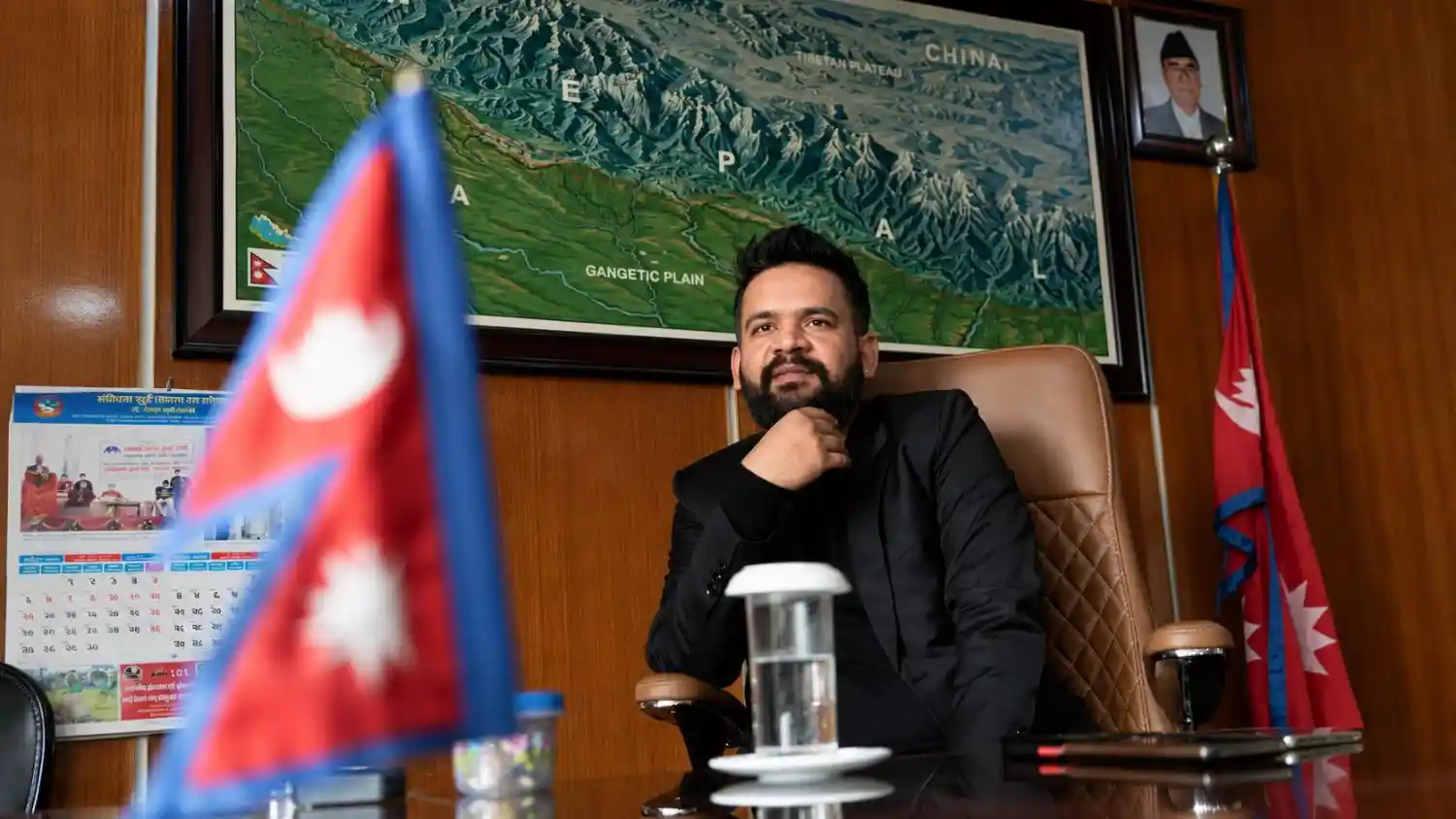
This trend gained yet another public voice in May 2026 when Balendra Shah, the recently elected mayor of Kathmandu and the head of the Rastriya Swatantra Party, made waves in a statement suggesting that perhaps Nepal had also made incursions on Indian land in some areas, as India had done on Nepali soil. The implication was a political shocker in Nepal, where the common belief has long been that India is the transgressor and Nepal has been wronged. But it is also a statement of truth in the face of a complicated issue.
The India-Nepal border spat is hardly a conflict that cannot be resolved in principle. There is simply too much in common between the two nations—from their common cultural and religious background, trade relations, family links to the overarching need for regional peace and stability—for either country to remain alienated from the other for a prolonged period of time. A compromise on Kalapani and Susta can theoretically happen. It just requires political will to engage in such a process.
For India, this means willingness to engage in negotiations where Kalapani was a settled issue in the past. For Nepal, this would involve bringing up this issue at official bilateral summits, instead of addressing it through constitutional amendments and banknotes. For both parties involved, it also means recognising the fact that the Eminent Persons Group report compiled all the way back in 2018, but not yet approved by either side, provides the necessary basis for discussion.
The injury will never heal by itself. A river without an accepted origin point, a mountain pass contested by three nations, and a colonial-era treaty none interpret entirely alike – these are the elements of a dispute which could continue into the third century if India and Nepal both fall prey to the easy belief that by not settling it, they are somehow managing it. They are not. And the sooner they face each other across the table and start that difficult conversation they need to have, the sooner their shared wound might begin to heal.