I
t was without any ceremony, but not without any significance.
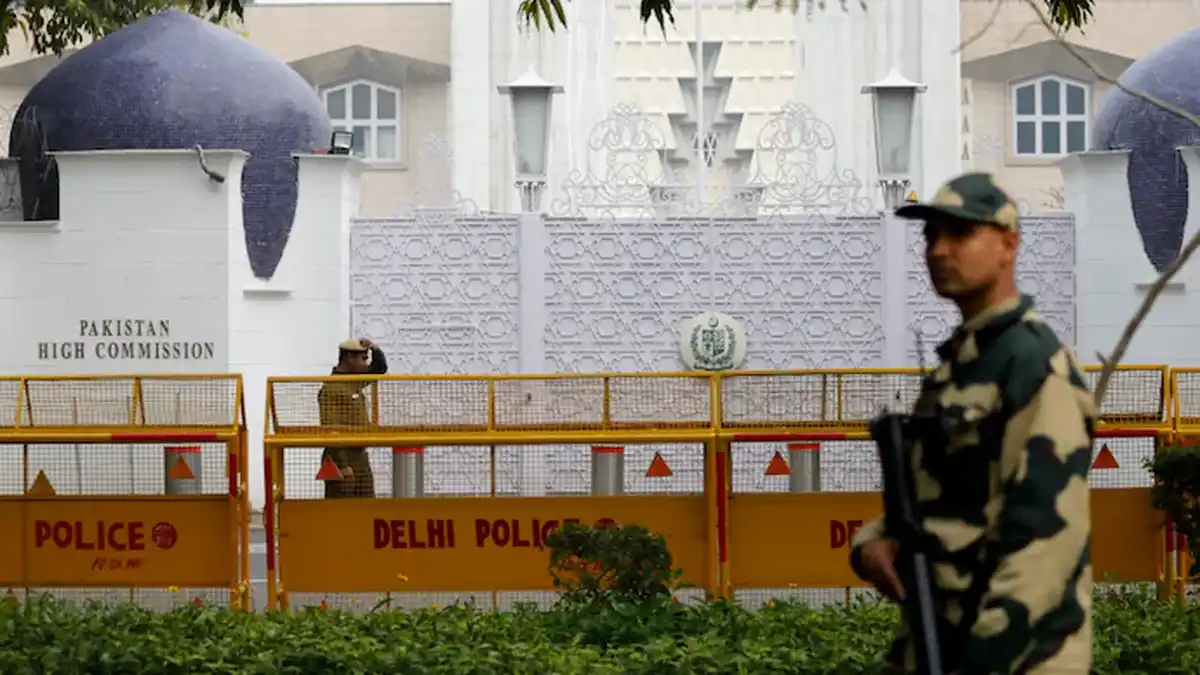
There have been some significant changes in the security arrangements at the Pakistan High Commission in New Delhi. The Delhi Police have stripped away traffic barriers that used to be stationed outside the diplomatic mission.
They were no short-term installations; in fact, these barriers used to form an integral part of the outer security boundary of the diplomatic mission.
Their sudden withdrawal is being perceived as no routine matter.
It was an action not restricted only to bollards and barricades.
Sources claimed that officials in New Delhi demolished the so-called illegal structures near the Pakistan High Commission in Shantipath in the diplomatic area.
These structures and queue barriers near the visa department of the Pakistani mission were situated outside the boundary of the compound in a lane, and have been demolished by the concerned authorities.
It was not even a covert demolition. A JCB machine was used for removing these structures.
Nothing happened in isolation. This happened as a direct consequence of an act that took place a few days back.
This happened only three days after the security barriers at the Indian High Commission in Islamabad were torn down by the Pakistani authorities.
The Pakistani side had torn down some parking poles at the Indian High Commission three days ago in spite of the formal protest raised by the Indian High Commission.
This is very important as India did not simply respond but had already raised a formal diplomatic objection that was overruled.
There are no attempts at hiding what the move is all about.
The New Delhi move is being looked upon as a reprisal move in the wake of a deteriorating diplomatic relationship between the two nations.
In the world of diplomacy, this form of matching moves has a name called reciprocity and it is a very common practice used by nations to show their dissatisfaction without going on to a higher level such as a protest or expulsion.
It is not the first time that the Delhi Police have taken down barriers at the foreign mission premises as a deliberate diplomatic move.
In March 2023, barriers at the British High Commission and the British High Commissioner’s residence were torn down, days after Khalistan activists tore down the Indian national flag at India's High Commission in London.
At the time, a senior official had no qualms about saying it was a "retaliatory move" against the poor security arrangement around the Indian mission in London, with some sources saying that there was more planned in the way of punitive measures, like closer supervision of the British Council offices in the country.
This eventually ended with the UK making moves to undo the damage done. The British Foreign Secretary, James Cleverly, tried his best to stop things from going downhill further by ensuring better security for Indian missions and their personnel after a meeting with the Indian High Commissioner.
The situation in question is also not the first time when barricades outside the Pakistan High Commission have caused controversy.
Following the Pahalgam terror attack in which 26 people died in April 2025, Delhi Police decided to increase security measures outside the Pakistan High Commission through erecting barricades in three layers.
However, it was not long before all those barricades were removed, despite the protests of the protesters from organizations such as the Anti-Terror Action Forum and the BJP who assembled outside the mission in protest of the terror attack.
It should be noted that the security agencies maintained their increased security measures despite the removal of the barricades a day after diplomatic relations between India and Pakistan had been downgraded and Pakistan's diplomats had been expelled.
Removal of the barricade on Monday cannot be taken in isolation but is part of an India-Pakistan relationship that has been getting worse since the Pahalgam attack.
The relations between the diplomatic missions of the two countries have been strained for quite some time now, and there has been a situation in which small administrative steps like removing of a traffic bollard are interpreted as deliberate acts of signaling.
For anyone watching from the sidelines, the movement of a few bollards is not going to matter much.
In India-Pakistan relations, it certainly does not.
The security set-up surrounding any foreign mission functions as a sort of ongoing negotiation where both sides measure precisely how much security and inconvenience to afford the diplomats of the other nation, depending on how their larger relationship is faring.
When such a calculation goes awry, as it clearly did this week, it becomes one of the few tangible signs the public receives of the tensions inside the foreign policy process.
Neither government has made any official statement that would connect the two acts of dismantling barricades. The idea of a tit for tat remains mostly within the realm of unnamed officials and media analysis.
According to historical precedent – exemplified by the episode of the British High Commission in 2023 – such reciprocal actions often prompt a counter-action intended to defuse the situation before it worsens even further. It is unknown how Pakistan will react to India’s actions or whether both capitals will let the barriers remain disassembled.