To be honest. Several years past, those discussing space travel usually mentioned NASA, Russia, or perhaps China.
A short time prior, India looked like the underdog, a nation that somehow placed a satellite near Mars for less than Gravity's budget.
Global stories focused on saving cash and clever tricks. Conditions Differ Today. Currently, the Indian Space Research Organisation (ISRO) stands firm yet remains active.
Looking at ISRO's upcoming schedules, one sees a major shift ahead. We discuss sending humans to orbit, mining and bringing back dark side moon dirt, and creating a lasting Indian spot in space.
This goes beyond national pride; it alters how the global community views space.
The Human Factor: Executing Gaganyaan involves sending up an unmanned metal container, which is manageable.
You write the software, then conduct ground tests on thrusters, launch it, and watch remotely from a secure control center.
Should things fail, funds vanish and pride suffers, yet all remain unharmed.
Yet placing real humans inside that vessel? Engineering spacecraft demands a vastly higher degree of technical stress.
Gaganyaan stands as India's inaugural human spaceflight undertaking, representing immense difficulty.
Goals include ferrying Indian astronauts to low earth orbit briefly and bringing them home securely.
Achieving this requires ISRO engineers to construct parts never previously conceived.
Engineers must develop life-support units generating clean oxygen and removing carbon dioxide within tight cabins.
The organization designs an emergency exit mechanism to forcefully separate the crew module from the primary rocket upon malfunction.
Preparation for this landmark space venture has spanned many years.
ISRO has engaged in rigorous trials for quite some duration already.
Success would make India merely the fourth nation globally to send its own citizens into space, proving New Delhi can sustain life in vacuums.
Such achievement confirms our tech meets the highest standard for preserving human existence in space.
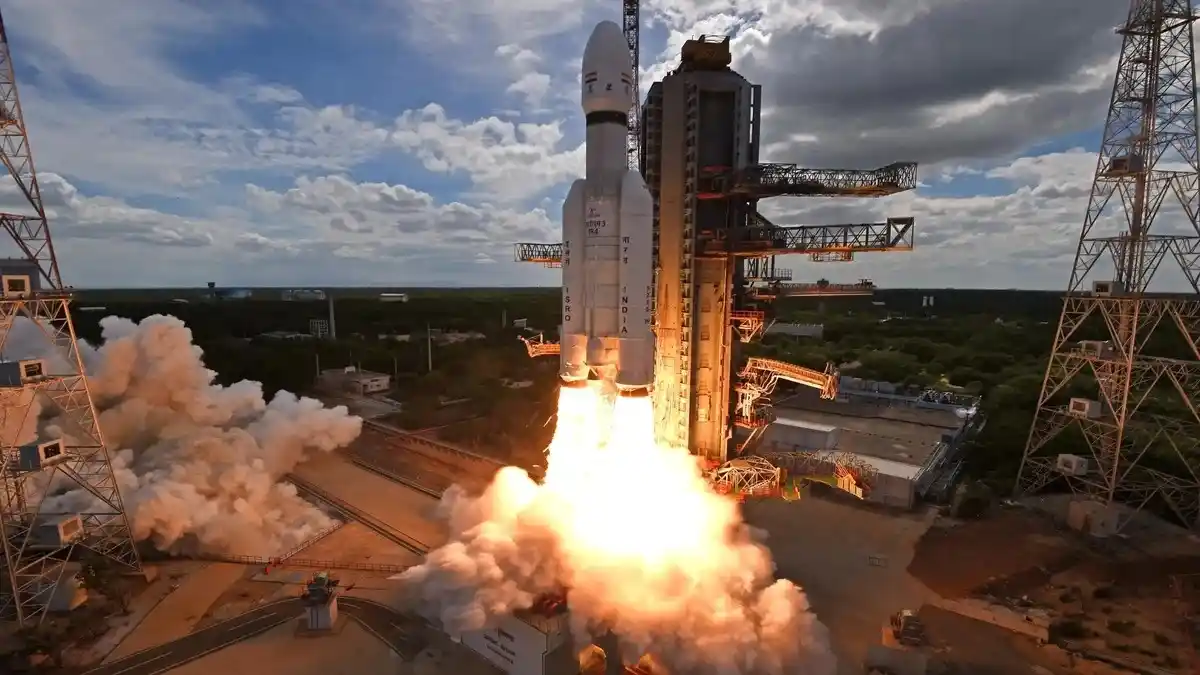
People recall locations during Chandrayaan-3's landing at the lunar south pole.
Success was a huge victory, particularly following the pain of the Chandrayaan-2 crash several years before.
Yet if you believed ISRO would rest and celebrate for the next ten years, you lack knowledge about Indian engineers.
They are currently designing Chandrayaan-4, a sample return mission, which is much harder than a basic landing.
Chandrayaan-4 is a sample-return mission.
Chandrayaan-4 needs to reach the Moon, touch down securely, put out a drill to grab moon dust and stones, put those items inside a safe box, lift off from the lunar ground, and find its way home to our planet.
That acts much like running several separate space trips all at once inside one big plan.
At the same time, India is working together with JAXA regarding the LUPEX mission.
Japan is making a rover, yet India is creating the landing vehicle part.
Both sides are going toward the dark, icy holes near the South Pole looking for frozen water.
Doing this is not merely about being curious scientists.
People cannot bring large water containers from Earth because the cost is very high.
We must get water right there, split it apart into hydrogen gas and oxygen gas, and then drink it or burn it as rocket power.
India is laying down the groundwork for later living spaces among the stars.
We are also looking in the exact opposite direction.
India's Aditya-L1 spacecraft is parked at a gravitationally balanced point in deep space, staring directly at the Sun.
Studying solar physics is crucial for planetary defense.
The Sun regularly throws massive tantrums called solar flares and coronal mass ejections.
These are giant clouds of radiation and magnetic energy.
If a massive solar storm hits Earth directly, it can literally fry our communication satellites, knock out global GPS networks, and collapse electricity grids on the ground.
By analyzing the Sun's outer atmosphere every second, India provides crucial data to a global warning network, keeping our tech-dependent lives running smoothly.
Next, we face returning to Mars.
The initial Mangalyaan effort stunned the worldwide space sector since India succeeded immediately upon the first attempt.
Currently, Mangalyaan-2 exists merely as a concept.
Here, a simple camera will suffice no longer.
ISRO intends to launch a significantly larger vehicle equipped with intricate tools to chart the red world's air and form in profound, sharp resolution, broadening mankind's grasp of planetary development.
Looking forward ten or fifteen years, the major shift involves the Bharatiya Antariksh Station, which is India's personal space facility.
The current International Space Station utilized by all nations today is aging, corroded, and costly to upkeep.
Retirement seems imminent.
India chose that rather than leasing areas abroad, we require our distinct base.
Constructing a full space station piece by piece demands perfecting independent docking so that distinct vehicles locate one another in total darkness despite speeds reaching thousands of kilometers per hour and connect flawlessly.
ISRO just demonstrated capability here via their recent SPADEX test success.
Owning our own facility allows Indian scientists to stay in weightlessness for months, checking out fresh drugs plus cutting-edge manufacturing methods used in orbit.
The Secret Sauce: Space Startups However, there exists a significant point often overlooked by many observers: ISRO does not currently perform every single task independently anymore.
Throughout multiple decades, India's space initiative remained entirely restricted within official government boundaries exclusively.
Currently those barriers have been removed fully and extensively.
The administration established a specific regulatory entity named IN-SPACe, permitting commercial firms to utilize ISRO's advanced launch facilities and experimental laboratories effectively.
Suddenly, there exist many space-tech firms within India, led by young engineers and fresh graduates.
These groups construct personal rockets, print engine parts via 3D methods quickly, and send small satellite groups up to observe climate shifts or assist local growers watching fields.
Such public-private cooperation alters the situation.
This allows ISRO to direct power toward major scientific study and far-space travel, whereas business entities manage routine commercial flights.
Looking at the broad view, India's space path enters a stage less focused on staying alive and more on pure, unfiltered drive.
We show major science does not need endless money; it needs clever thinking and nonstop action.
If it is a manned pod circling the planet, a vehicle mining moon frost, or a personal booster firing off an Indian shore, the coming ten years of space study will hold a huge Indian mark.
We are not merely gazing upward at celestial bodies anymore; we are seriously designing ways to reside amongst them.