N
ot too long ago, Britain ruled the largest empire in history that covered one-quarter of Earth's surface. Nowadays, however, the conversation on the UK focuses on an entirely different subject—its decline. The newspapers are full of stories of low wages, understaffed hospitals, poor infrastructure, and a political elite that changes prime ministers more often than seasons. There are those who say that Britain is "going under."
However, there are also those who say that this rhetoric is sensationalist and exaggerated and that Britain is merely experiencing a tough transitional period similar to other developed countries.
The present work attempts to shed light on the reason why so many people consider Britain to be in decline, the actual facts about the issue, and immigration in particular as one of the most controversial subjects of the debate.
One of the most easily measurable issues facing the country is its economic one. In the years since the 2008 crash, wage increases in the UK have essentially stagnated in real terms—a period that represents one of the worst economic performance records in living memory. Productivity growth – which measures how much each individual worker produces on average – has been near zero for more than a decade, an issue economists refer to as the "productivity puzzle."
Another issue that makes things more complicated is Brexit. In leaving the European Union in 2020, Britain was leaving the world's largest free market of around 450 million people. Independent economic projections from the Bank of England and the Office for Budget Responsibility estimate that it has harmed UK trade and economic production when compared to where it could have been had Britain remained part of the EU.
In the international arena, the role of Britain has also diminished. It boasts a smaller army than any previous generation in its history, and the opinion of London on important international matters is not always heard after that of the United States, the EU, and the emerging powers such as China and India. In view of the fact that Britain used to own a vast empire across the world, this appears to be a big change, although it is not unique but rather a common phenomenon.
However, aside from economics, everyday life has proven to be the clearest indicator for most ordinary British citizens that something has gone wrong. Firstly, the NHS—a source of great national pride—has a number of issues: long waiting times, understaffing, and budgetary problems. Making an appointment or calling an ambulance in certain places takes significantly more time than it used to.
Secondly, housing. Lack of homebuilding over decades in such key cities as London and the South-East region has made houses and rental accommodation increasingly unaffordable to people working average jobs. Younger generations of British citizens find it increasingly difficult to purchase property.
Lastly, the country has aging infrastructure—delays with railway constructions, complaints about water providers polluting the water, and lack of investment into its maintenance—which adds up to this sense of decline, regardless of the actual numbers of GDP.
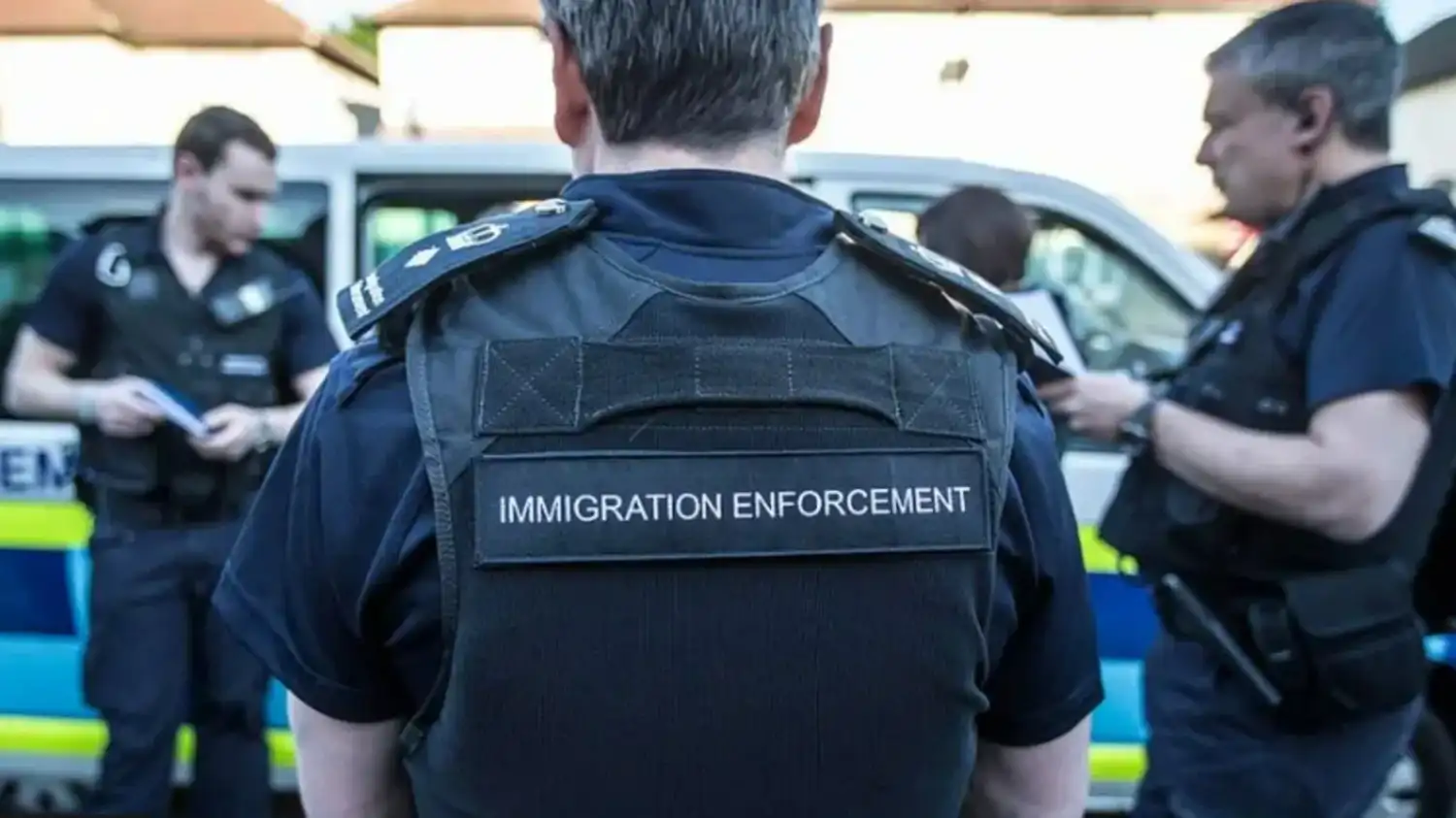
Photo: @Getty Image
Indeed, immigration has been one of the most heated topics in this debate, and it might be worthwhile to tease apart the arguments that have been made.
Overall, net migration into the UK has seen a rapid increase in recent years because of post-Brexit visa rules, which have opened up new opportunities for non-EU workers and students in addition to humanitarian visas to Ukrainians and Hong Kong residents.
While some believe that this has created real challenges for housing, public services, and infrastructure in those towns that have had to deal with an influx of immigrants rapidly without adequate infrastructure development.
On the other hand, there have been very strong denials of the idea that immigration is the core cause of problems in the country. Migrants tend to be relatively young and of working age. They help fill the shortage in health workers, farmers, and care professionals that the NHS has admitted its inability to provide.
According to economists at various organizations such as the Office for Budget Responsibility, the overall impact of migration on the economic growth of the country has been positive despite the burden of short-term challenges in certain locations.
The topic of the discussion also has cultural aspects beyond economic ones. While some people in Britain believe that changes in demographics have taken place too rapidly for them to cope, other people see the multiculture of the country as one of the biggest advantages of Britain and regard the language of anti-immigrant sentiments as just an attempt to deflect responsibility for complicated socio-economic problems onto the easily identifiable scapegoat.
What seems to be obvious is that immigration is really the issue worthy of honest discussion. What remains disputable is what share of Britain’s economic and social problems can be reasonably blamed on immigrants rather than other factors accumulated through many years of British policies.
Any analysis of Britain's waning status is impossible without considering the political instability that the country experienced in the previous decade. In just five years since 2016, the UK has seen five prime ministers and several general elections, as well as a lengthy Brexit process. In 2022, the short-lived period of Liz Truss' governance, which led to a financial crisis due to her mini-budget and devaluation of the pound sterling, gained international attention as an example of bad governance.
This instability has made it challenging for a single government to develop a long-term economic policy. Business people have long been mentioning policy uncertainty as one of the barriers for investments.
Indeed, it might be worth considering the term "decline" on its own. Britain is the sixth largest economy in the world; its universities are among the best in the world; it boasts a vibrant finance industry based in London and the culture created by its films, its music, and its media.
Therefore, instead of one single moment of a "sinking," the description of what is taking place is better understood as a long-term process of adjustment by which a wealthy and historically influential country is struggling to find its place in a world where it does not necessarily hold the same influence anymore and coping with its self-created failures.