B
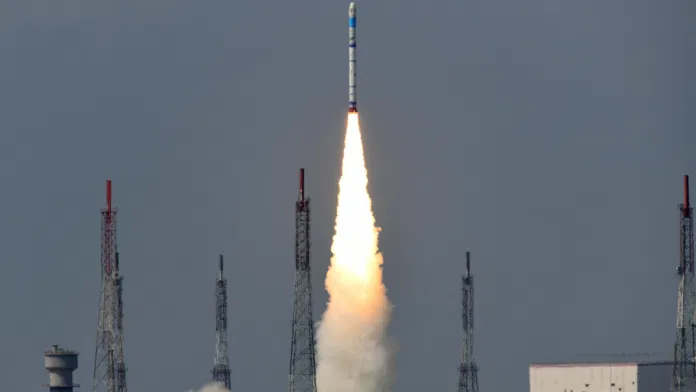
engaluru hasn't seen an ISRO launch in almost seven months. That changes, if all goes to plan, in the first week of September.
The Indian Space Research Organisation is gearing up to send its NVS-03 satellite into orbit, the third in a series meant to rescue India's homegrown navigation system, NavIC, from a slow and fairly public unravelling. A senior ISRO official told ThePrint the satellite is already sitting at the Sriharikota spaceport, checked out and ready to fly. An exact date hasn't been locked in yet, but the target is the opening days of September.
There's a note of cautious redemption in how officials are framing it. It has been, in the words of one official, a tough year for the agency, and this launch is being pitched internally as a chance to turn that around.
The readiness of NVS-03 isn't just agency chatter. Union Minister Jitendra Singh told the Lok Sabha earlier this month that the satellite was launch-ready, and added that two more in the series, NVS-04 and NVS-05, would follow in fairly quick succession once NVS-03 is up. Not far behind those, ISRO also plans to launch GISAT-1A, also known as EOS-05, an earth-imaging satellite capable of watching Indian territory in something close to real time, within weeks of the NVS-03 mission.
That's an ambitious back-to-back sequence for an agency that has, by its own admission, had a rocky stretch.
NavIC was conceived as India's own answer to GPS, sitting in the same category as Russia's Glonass, Europe's Galileo and China's BeiDou. On paper, it's a regional constellation built to give India independent positioning and timing, free of reliance on foreign systems. In practice, it's been running well below strength for years, and ageing hardware is the main reason.
The trouble goes back further than most people realise. In 2016, the atomic clocks aboard IRNSS-1A, the first satellite in what was then called the Indian Regional Navigation Satellite System, stopped working properly. ISRO said the rest of the constellation, six satellites at the time, was still functional, though it later admitted some of those had rubidium clock issues of their own. The satellite sent up to replace 1A, IRNSS-1H, launched in August 2017 and never even made it to its intended orbit; a heat shield failed to separate during ascent.
More recently, and more damagingly, NVS-02 suffered what officials describe as a partial failure in January last year. A valve meant to let oxidiser reach the satellite's thrusters never opened, leaving it stranded in a transfer orbit instead of its planned geostationary slot. The satellite itself stayed healthy, solar panels deployed, power fine, communications working, but without functioning thrusters it couldn't get where it needed to go for navigation duty.
Add it all up and the picture Singh gave Parliament in March isn't encouraging: of 11 satellites launched under the NavIC banner, only eight are still functional. Five of those are limited to one-way messaging. Just three are actually broadcasting navigation signals, which is the whole point of the system.
NVS-03 also carries some symbolic weight simply because of how thin ISRO's 2026 launch record has been so far. This will only be the agency's second mission of the year. The first, in January, failed to place its payload in orbit at all, a setback that came on the heels of another botched mission the previous year.
Officials aren't dressing that up much. One senior ISRO figure, speaking about the year as a whole, put it plainly: it's been a rough stretch, but there are more launches planned, and ups and downs come with the territory in space operations.
Whether that resolve translates into a clean launch in September remains to be seen. But for a navigation system that millions of everyday applications, from fishing boats to ride-hailing apps to disaster response teams, are meant to eventually lean on, the stakes attached to this one satellite are bigger than its size would suggest.
ISRO is preparing to launch its NVS-03 navigation satellite from Sriharikota in the first week of September, its first mission in nearly seven months and only its second of 2026. The launch is meant to shore up NavIC, India's regional GPS-equivalent, which is running on ageing hardware, a history of technical failures dating back to 2016, and the fallout from NVS-02's botched orbit-raising in January last year. Of 11 NavIC satellites launched so far, only three are broadcasting full navigation signals. NVS-04, NVS-05 and the earth-imaging satellite GISAT-1A/EOS-05 are expected to follow NVS-03 in the coming weeks.