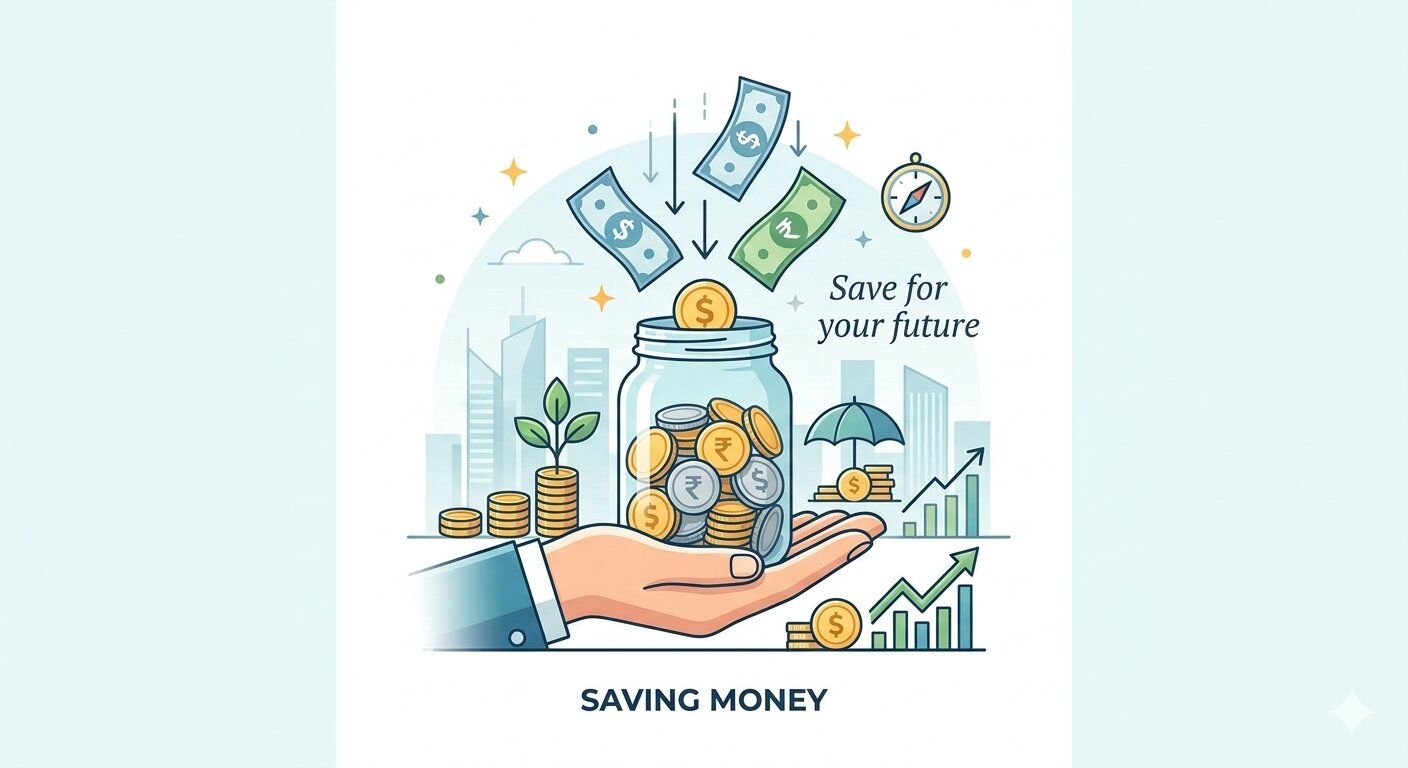
Saving money every month is crucial for stabilising one's financial condition.
In today's times, saving money is just as important as earning it. If you consistently save small amounts over time, you can eventually build a substantial financial safety net.
In this day and age, nothing gets done without money; it is absolutely essential for an individual. If you lack funds today, no one pays you any heed; therefore, saving money is just as crucial as earning it.
At the start of each month, record your salary and keep a detailed account of where your money is being spent. Doing this will reveal exactly where the bulk of your spending is occurring. You can then prioritise essential expenses while cutting back on frivolous daily spending, thereby enabling you to save a portion of your income on a monthly basis.
This is a widely popular rule; by following it, you can effectively save your money:
1: Allocate 50% of your earnings to cover your essential expenses.
2: In today's world, everyone has personal wants (such as travelling or shopping); use 30% of your earnings to fulfil these desires.
3: Finally, deposit the remaining 20% into your savings.
By doing this, you can effectively track and manage your expenses.
Shortly after your salary is credited, transfer that 20% portion into your savings account; only then should you proceed to spend the remainder. By doing this, you will consistently save 20% of your income every month.
Nowadays, very few people in India do not possess a credit card. However, these credit cards often disrupt the household budgets of many individuals; therefore, they should be used with extreme prudence. Furthermore, if at all possible, it is advisable to refrain from obtaining a credit card in the first place.
Saving alone is insufficient. If you are not investing your money, you are making a significant mistake; investing is absolutely crucial. You can invest in instruments such as SIPs and fixed deposits, and this money will continue to grow steadily over time.
Finally, everyone should maintain an emergency fund. You should set aside savings sufficient to cover at least 3 to 6 months' worth of expenses, which you can utilise during times of emergency.