The rocket launched on Sunday morning in Cape Canaveral had one purpose in mind: to see more of the universe than anyone has ever seen before.
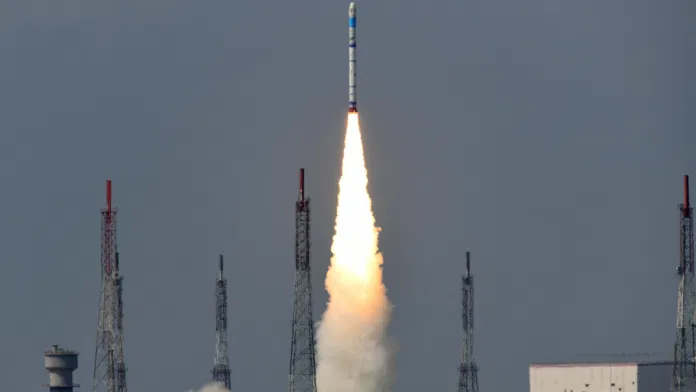
The Roman Space Telescope, which is NASA’s latest star attraction, was launched by SpaceX on Sunday with the goal of searching for planets outside of our solar system, studying mysterious dark energy, and mapping out the cosmos in unprecedented detail.
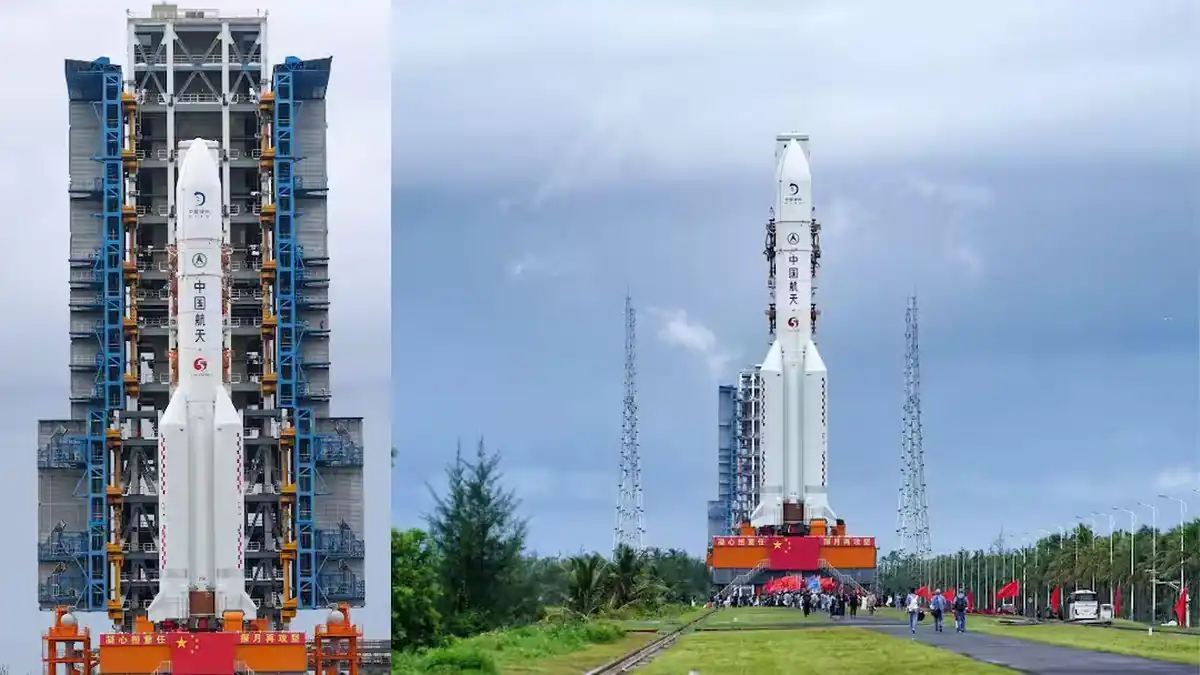
The $4.3 billion telescope blasted off early Monday from Cape Canaveral in Florida atop a Falcon Heavy rocket.
Roman won’t orbit our planet; instead, it will orbit a distant spot in the sky.
The telescope will head for a location about one million miles away from Earth at an area called L2, a Lagrange point where the gravity of the Sun and the Earth combine to keep the telescope stable in relation to both celestial bodies.
But it will have company. At L2, Roman will join another of NASA’s trusted observatories, the James Webb Space Telescope, which was launched in 2021 — so now we’ll have two of the most advanced telescopes working in the same remote region of space.
The name given to the telescope has been done purposely to honor a great man, who many not associated with astronomy would not know about.
Nancy Grace Roman, who was the first chief astronomer in NASA, believed in the importance of space telescopes all her life at NASA. The Roman space telescope is the first in NASA to be named after a woman, and was launched just one year earlier than expected.
One of the most interesting facts associated with the $4.3 billion project is how the main mirror of the telescope got into the mission.
Roman Space Telescope, launched by NASA Sunday, uses a donated Hubble-class mirror originally built for a spy satellite to begin its journey of exploration through space. Roman's primary mirror is the same size as Hubble's — nearly 8 feet in diameter — and is a gift to NASA from the National Reconnaissance Office, which donated the mirror over a decade ago for reuse in NASA missions. The second mirror is in storage.
The history behind this piece of equipment goes even further back. As Scolnic describes, as the plans for a telescope to look for exploding stars were developed by NASA, "the National Reconnaissance Office approached NASA and said, 'We have this amazing satellite sitting in a hangar and it’s not being used. And what do you guys think about us, instead of pointing downwards, pointing upwards, and you guys using it?'" NASA agreed to use the mirror.
Despite this "free" mirror, the price of launching the telescope and running the project costs $4.3 billion.
The development of the surveillance device into an astronomical tool involved a lot of engineering, rather than just a change of purpose.
The curvature, smoothness, and polish of the donated mirror were adapted to get the right prescription, and the trusses and other parts of the telescope were changed to withstand the extreme cold temperatures at L2.
Project manager Jackie Townsend explained the difficulty as follows: "I think our engineering team sees it as us getting a set of well-proven parts which had a very precise optical system. But actually, we have had to kind of start again and make it our own to work at our operating temperatures."
However, what makes Roman unique compared to other previous space telescopes is not only its mirror but rather the massive amount of images the telescope will be able to capture.
The Nancy Grace Roman Space Telescope will have a field of view at least 100 times greater than that of Hubble and, thus, may detect light from a billion galaxies throughout its operation.
To put things into perspective, people in charge have come up with some amazing analogies regarding the amount of information: just one image from the full-resolution of Roman's wide-field camera of 300 megapixels will capture 45 city blocks or the whole El Capitan rock formation in Yosemite National Park. Taking wide-angle sharp pictures using the Roman telescope will need a half-million of 4K televisions. While the Hubble Space Telescope transmitted 172 terabytes of data in 30 years of its operation, Roman will transmit an astonishing 2,500 terabytes within five years of its work.
The scientific objectives of this mission cover some of the largest unanswered questions in modern physics.
Nicky Fox, NASA's science director of missions, captured the magnitude of these discoveries by saying, "It will identify thousands of supernovas, tens of thousands of planets, billions of galaxies and tens of billions of stars."
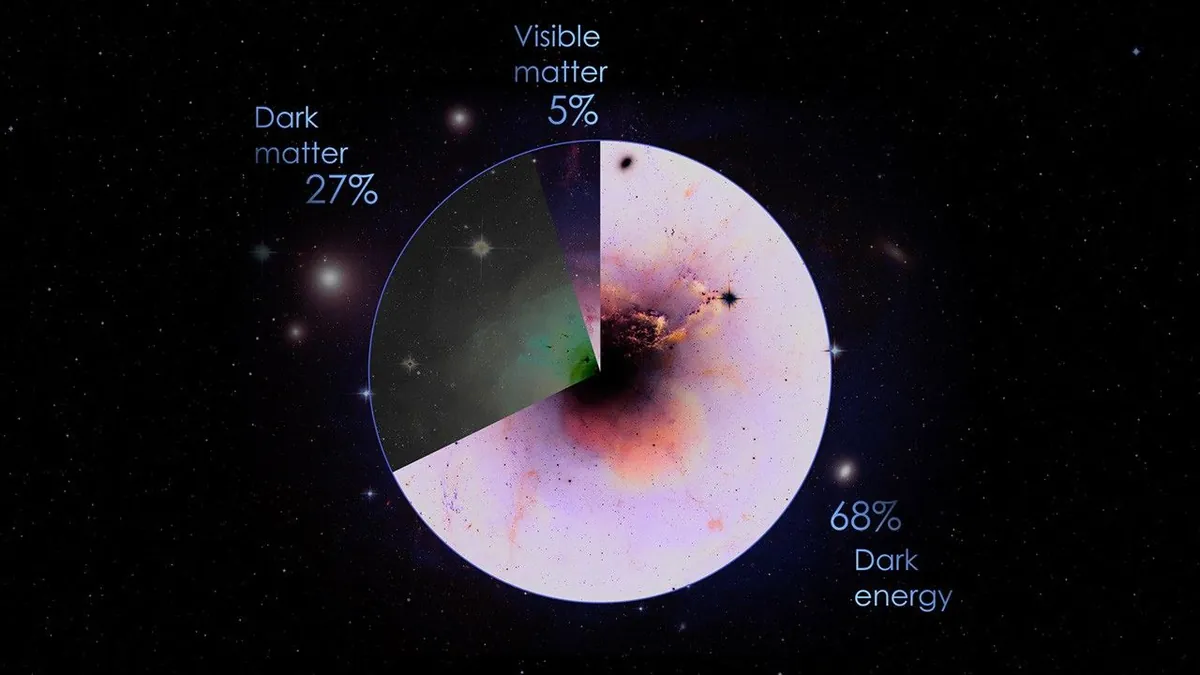
Aside from these statistics, the Roman space telescope is expected to discover tens of thousands of exoplanets along with investigating the mysteries of dark matter and dark energy – not to mention that this telescope might also be responsible for the discovery of the first-ever exomoons, moons of exoplanets outside our solar system.
At the core of the Roman space telescope mission lies one of the hardest mysteries in modern cosmology.
As stated by Kristen McQuinn, director of the Nancy Grace Roman Space Telescope mission office at the Space Telescope Science Institute prior to its launch: "There may be some fundamental piece of physics we just don't have yet, and Roman can help us illuminate that."
It is anticipated that the mission will last for five to 10 years, observing the effect that dark matter and dark energy exert on distant stars and galaxies, which account for the vast majority of mass and energy of the universe, but which are still almost completely unknown to physics.
The launch on Sunday marked the culmination of an unusually long developmental period even for a large space telescope.
The $4.3 billion telescope has been under development for close to a decade and is considered important to the science community for at least 16 years. This is a period which began long before many of the astronomers who are now working on this project joined this career.
Space missions that are conducted on a large scale usually end up being late and exceeding costs.
It has been in development for almost twenty years, and it will be launched nine months earlier than planned — which is very unusual for such an expensive flagship mission of NASA.
The actual launching provided for a dramatic series of events beyond the mere separation of the telescope from the rocket.
Only a few minutes after the dramatic launch of the telescope, the two reusable solid-rocket boosters of the rocket started descending tail first onto Cape Canaveral, causing sonic booms during the process of landing. The next step saw the separation of the telescope from the top of the rocket, earning applause from the ground controllers.
This event had much meaning for Nicky Fox personally, who observed the whole process in tears and said: “It’s such a good day!”
Even in the end stages on the ground, the Roman telescope needed special handling because of how much it cost and was being built.
This is typical for an instrument like this. NASA had to go to great lengths not to have human hands touch their $4.3 billion telescope before launching it into space – because this telescope could not be easily fixed once launched to L2, which is one million miles away from the Earth.