F
or the currency chest, which is essentially a safe where cash is stored in bulk according to the RBI guidelines, it does not get any more serious than being caught in possession of fake currency.
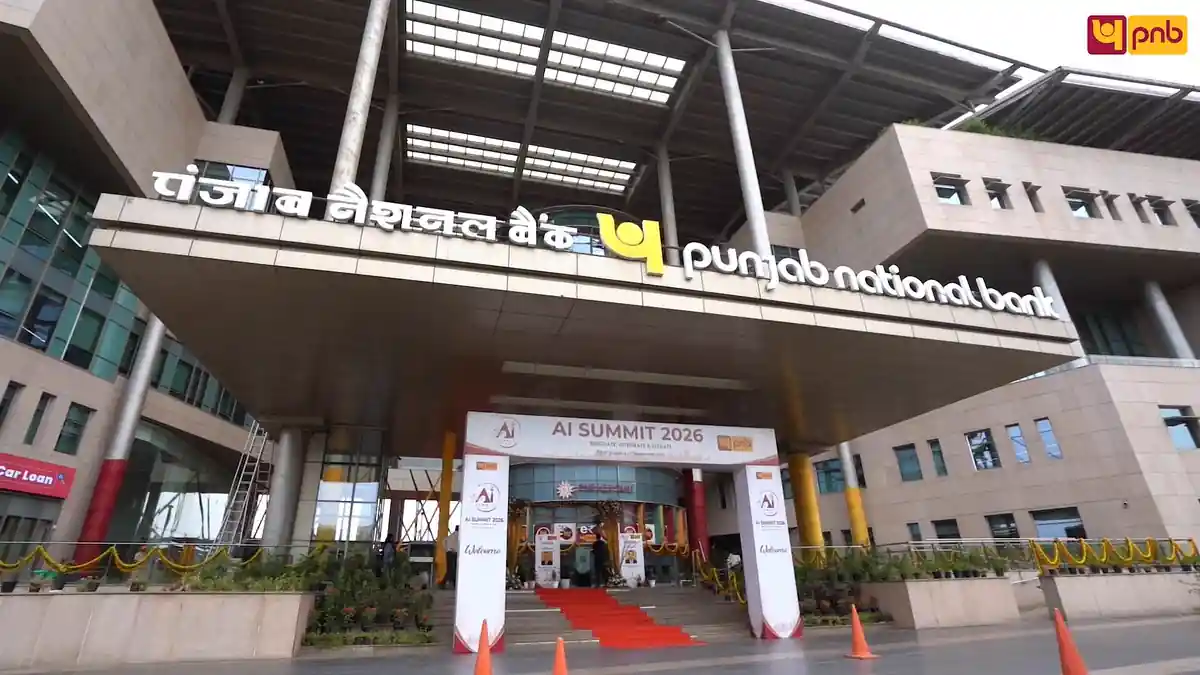
There have been some revelations made in a very sensational case where fake currency amounting to crores of rupees has been discovered in the currency chest of Punjab National Bank.
The counterfeit currency amounting to about Rs 7.40 crore was discovered during an audit of the currency chest of Sophia Market branch, near Ghantaghar.
This case didn’t emerge based on any kind of information received or complaint made from outside; rather, it emerged within the internal verification system of the bank itself.
The fake money was discovered during the routine audit of the cash chest at the particular bank branch, which is posing serious concerns regarding the cash management practices of the banks.
In light of the very fact that the cash chest is supposed to be the most secure part of the entire cash structure of the bank, the discovery of the fake money in such huge amounts is indeed raising alarms for the concerned officials.
The leadership of PNB itself in the region did not waste any time in establishing the magnitude of the internal response that had already started.
According to the Chief Manager and Circle Officer of Saharanpur, PNB, Ms. Nisha Singh, three bank employees have been suspended due to this incident.
Based on the complaint raised by the bank's nodal officer, Mr. Arun Kumar Chaubey, at Sadar Bazar police station, three people have been made part of the case concerning the counterfeit currency.
These three are Ravi Kumar, who is the senior manager in the divisional office; Sushil Sharma, the manager of the currency chest; and Amit Kumar, the manager of the currency chest in Khera Bazar, Jagadhri, Haryana.
Not just this, another shortcoming has been discovered in relation to the same currency chest — there is a smaller shortage of cash that has been discovered.
In a different case relating to the same currency chest, a shortage of Rs 4.36 lakh has been discovered in cash that was dispatched to the headquarters.
A case has been filed against the housekeeper Vishal Kumar for the above mentioned shortage of cash.
Both the fake currency incident and the cash discrepancy have been considered as two different issues by the police despite being related to the same currency trunk.
As per SP City Vyom Bindal, there are two different FIRs filed for the two different instances with a total of four people named in the two FIRs.
The primary question that needs to be answered by the investigators at the moment is a tricky one, i.e., how did such an amount of counterfeit money worth crores of rupees get into the supposedly safe vault of the bank in the first place?
At present, the police are trying to find out how such a large number of counterfeit notes were able to reach the currency chest.
As currency chests get cash from various banks, the police will analyze the records from the banks' cash deposits till the currency chest.
Furthermore, it is necessary to understand whether the counterfeit notes reached the currency chest in one shot or in several cash deposits.
In addition to collecting information from the employees responsible for making cash deposits, the police will probably have to study CCTV recordings as well.
Currency chests act as a vital part of the cash management system of India, which are specific bank branches authorized by the Reserve Bank of India to hold bulk cash on behalf of the RBI and manage the cash flow from small branches to the central banking system.
As currency chests are situated at a vital point where huge amounts of cash flows every day from various branches, any vulnerability within the currency chest, be it the issue of counterfeit currency or any unaccounted loss, becomes significant not only for the particular branch but for all the branches that deposit cash at that very currency chest.
However, the occurrence of such a large-scale counterfeit breach is not a very common one. Currency management-related issues at Indian banks have come up in the past as well, in the form of either the passage of fake currency notes or cash loading of ATMs.
One previous incident in the capital city Delhi involved an arrest made of a worker of a cash loading firm at the ATM. He was discovered to be swapping genuine ₹2,000 currency notes for the so-called novelty “Children’s Bank of India” notes during the process of cash loading.
The reason behind such an activity was the sole custody of the cash vault on his part, without any other form of checks to prevent him from doing so.
Both of these cases are similar in the sense that there is too much dependence on individual custodians at handover points when it comes to currency handling systems.
Aside from the financial magnitude of the loss itself, the timing of the case is also very sensitive in terms of overall public confidence in the ability of banks to process cash safely, since the currency chest itself is one of the safer components of the bank’s cash handling process.
A break down at this point in the process — whether due to carelessness, corruption within the system, or even just a counterfeiting network that reaches all the way into the bank system — means that the issue goes beyond the particular branch and its deposit process.
Now, since there have been records of cash, deposits, and surveillance videos under review by the police, they claim that the complete story relating to the counterfeit money as well as the missing cash will only be known after the investigation process is completed.
Also, considering that out of the three individuals mentioned in relation to the counterfeiting case, Amit Kumar works at a currency chest in Haryana, and not in Uttar Pradesh, the investigation might have to cross state borders.