T
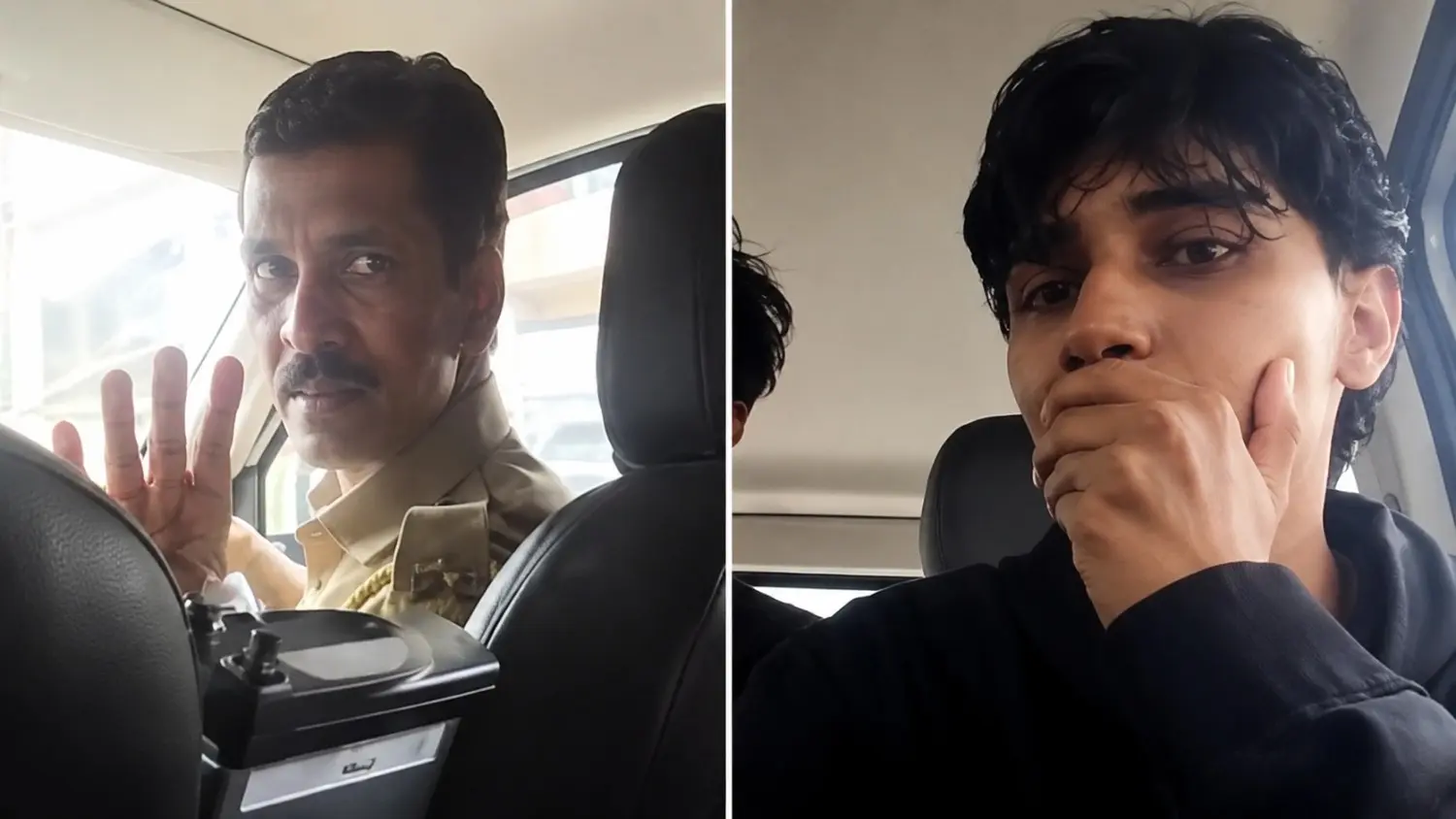
he student protest movement in Mumbai has taken a worrying trend as seen through a viral video showing a police driver in full uniform intimidating the detained protestors saying he will plant some drugs on them.
The footage has once again brought to light discussions at the national level regarding police behavior during public protests and the thin line between law and abuse of authority. The incident comes in the wake of various protests taking place across several locations in Mumbai in relation to the Cockroach Janta Party (CJP), a protest forum initiated on the internet and recruiting students and other members of the public.
The protests have arisen due to the issue of NEET paper leak that has caused frustration among the student community because of the threats posed to their future.
In the video footage that has now gained currency, it is clearly heard that an officer threatens the group of detained young protesters in very clear and threatening terms. As reported by various sources, the officer allegedly threatened the protesters by saying that 50 grams of narcotic powder will be planted on them if they come back to the protests because this action will ruin their life, and they won’t get any bail at all.
They are also said to be threatened by the officer that their protest will make his job tough and "there is no one worse than me," which has now become a matter of public ire. At present, the identity of the officer has not been officially disclosed by the Mumbai Police.
Nevertheless, keeping in mind the gravity of the matter, it has been decided by the police department that an inquiry be carried out to confirm the authenticity of the video footage as well as the behavior of the police officer.
Pending the result of the investigation, the driver who appeared in the footage has been shifted from his present posting.
There have already been several rapid political responses to the release of the video. Opposition leaders, seeing the footage as confirmation of the "police brutality" that they have long accused the authorities of practicing, have condemned what they see as a crackdown on freedom of expression.
Speaking on behalf of Congress party in Mumbai, where the video was originally posted on Facebook, an opposition spokesperson stated that the threats made by the officer in question are not only an intimidation of students but also "a direct assault on democracy."
Another Congress politician, Harshwardhan Sapkal, who is Maharashtra Congress president, criticized the "disturbing trend of police behavior" and expressed doubt over how police were able to use the threat of a false drug case against the protesters to silence them. In addition to the footage itself, there have been reports of various other measures taken by Mumbai Police against the protesters, including tracking of the activists online as well as home visits.
Although in this case the issue has received widespread attention due to the video going viral, it is far from an isolated instance in India’s police force. In another such incident reported earlier, video surveillance footage in the Kalina region of Mumbai reportedly captured some police officials putting something in the pocket of a man who was arrested during a raid, an act which ultimately resulted in the suspension of four police officials, including a sub-inspector.
In Bengaluru, too, the police have suspended some officers on other occasions for framing a street vendor and a doctor in false drug cases, one of which involved an attempt to bribe a police official. It would seem that the root cause of the problem lies in the abuse of the narcotics laws, more specifically the Narcotic Drugs and Psychotropic Substances (NDPS) Act, as a threat, rather than the proper use of such laws in law enforcement.
This is because of the strong bail conditions prevalent in NDPS cases which means that even without being officially arrested, the person under threat knows that he could be locked up for a long time if a case is registered against him.
In the case of the students and citizens of Mumbai who have been protesting against the corruption and malpractice surrounding the examination system, the video has become a symbol of all the intimidation that they claim to be combating.
They claim that pointing out possible problems with the examination system should not get one threatened with criminal prosecution. By describing the incident as an infringement of the people's democratic rights, Congress has managed to touch a nerve in this regard—that the government may try to silence public dissent through fear tactics.
On the other hand, the swift reaction of the Mumbai Police force and their decision to initiate an investigation and transfer the policeman in question to another duty has indicated that they realize that the allegations, if proven true, would amount to gross misconduct. In turn, how thorough this investigation would prove to be and whether there would be consequences for the officer will determine how much people will trust the process. As of now, the video and everything in it has not been independently verified by the Mumbai Police force. Viral videos, no matter how damning they seem to be, always need some kind of verification.