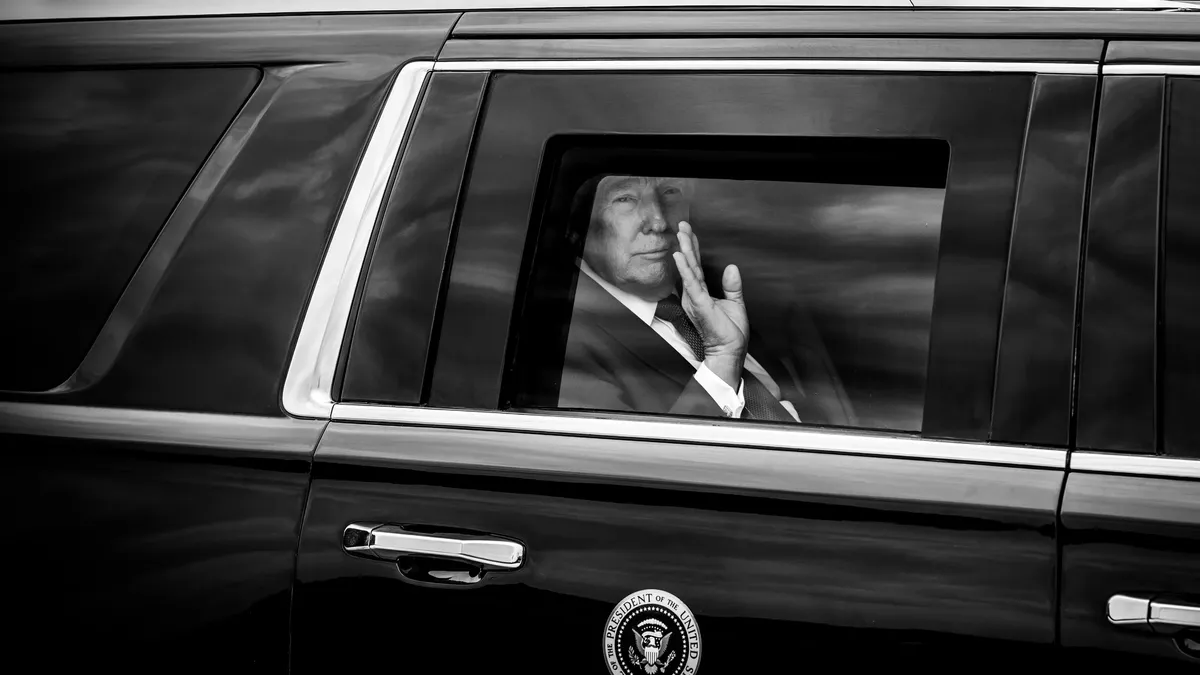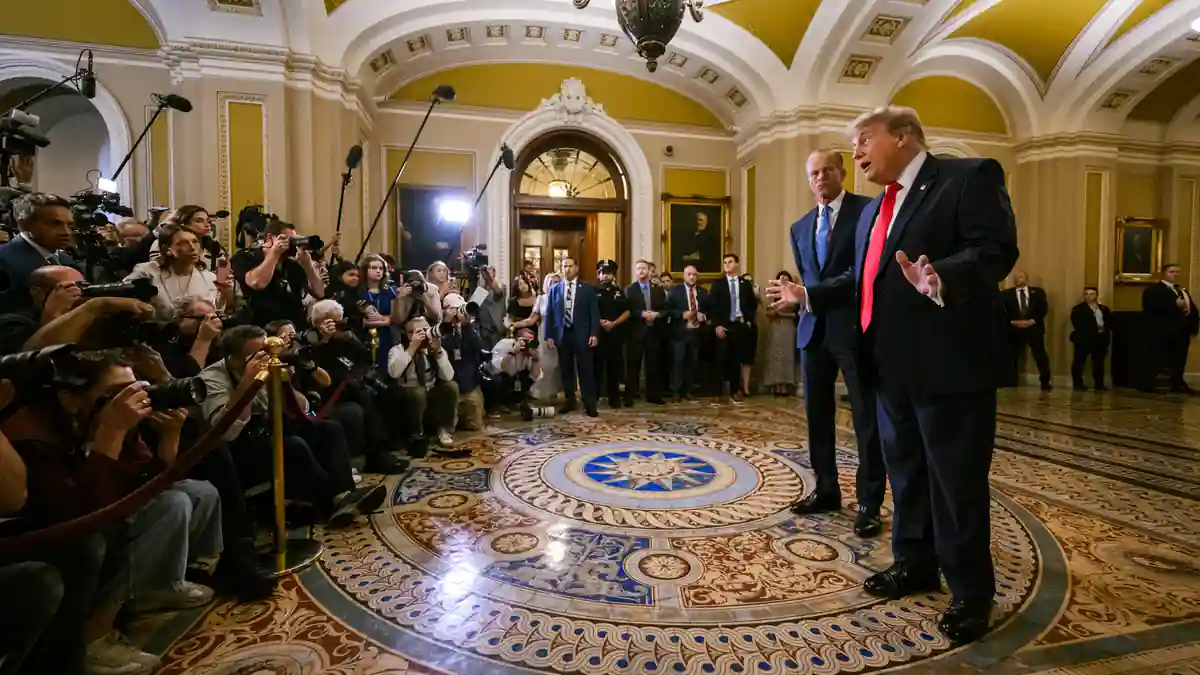
T rump was mostly talking about crime that night. Then, almost as a throwaway line, he dropped this: once Iran is finished, he's going to declare the Strait of Hormuz American territory.
"After we finish defeating Iran, which is being very badly defeated, pretty soon I'll be declaring the Hormuz Strait a territory of the United States," he told a room full of law enforcement officers at the David S. Mack Center for Training and Intelligence in Garden City, New York. No follow-up on how. No mention of Oman, whose coastline forms the other side of that same strait. Just the claim, tossed out between applause lines, like it was already settled.
It isn't. Not close.
Here's the thing everyone keeps skipping past: Hormuz doesn't need declaring. It needs traffic. And right now it barely has any.
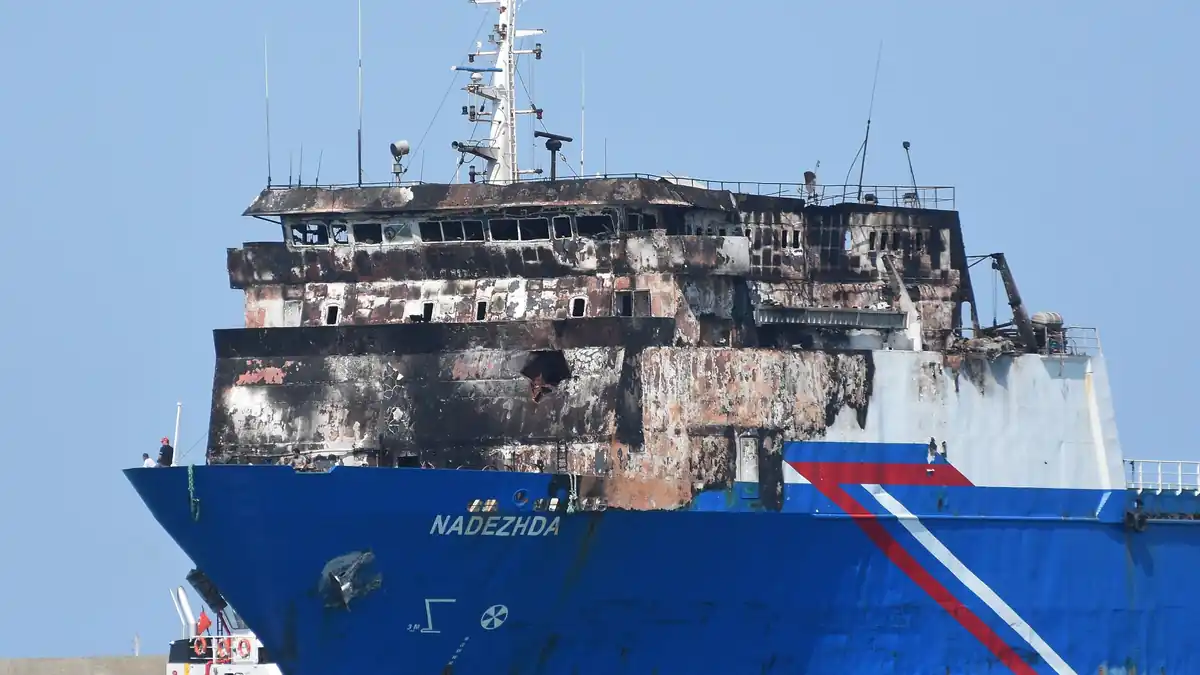
Before the war, somewhere around 130 to 140 commercial ships moved through the strait every day, carrying roughly a fifth of the planet's oil and gas. On Thursday, according to the shipping-tracker Kpler, exactly nine got through. Nine. That's the number a war does to a shipping lane in five months.
Trump talks about the US naval blockade like it's the whole story ("no ships get through unless we want them to", he said, calling it a wall of steel), but Iran shut its side down too, and has been squeezing the passage since the war started back on February 28. A ceasefire framework briefly held things together over the summer. It fell apart in July. Both sides blamed the other. The blockade came back.
Gas prices in the US have crept toward four dollars a gallon since, and Trump's pitch to voters has basically been: pay it, and be glad you're not living under a nuclear-armed Iran.
Iran didn't wait long to respond. Kazem Gharibabadi, the deputy foreign minister, posted something on social media that read less like diplomacy and more like a dare the strait, he said, can't be seized by a tweet, a carrier group, an executive order, or a campaign speech. Iran, he added, neither fears threats nor cowers before displays of power.
Blunt. And not new, either. Iran has treated Hormuz as leverage since 1979, threatening closures on and off for decades, including a scare back in 2011 that never actually materialized. This time it did.
So can he do it? Short answer, no not the way he's describing it.
Hormuz sits inside the territorial waters of two other countries, Iran on one side, Oman on the other. There's no treaty, no purchase agreement, no annexation clause hiding in a UN filing somewhere. Legal scholars already pushed back hard on an earlier, related idea Trump floated last month the US acting as "guardian" of the strait while charging a 20 percent toll on everything passing through. International maritime law protects free transit through straits like this one pretty explicitly, and experts said the toll idea alone would likely violate it. A full territorial claim goes several steps further than that.
People keep bringing up the Panama Canal as a precedent, and it's a fair comparison, just not the one Trump probably wants. The US ran that canal for close to a century, but it got there through an actual treaty in 1903 not a war and handed it back to Panama in 1999 anyway. Nothing like that exists for Hormuz. Trump has also, at various points, suggested other countries that rely on the strait, China included, should "police their own territory" there, which muddies more than it clarifies.
A ceasefire framework between Washington and Tehran is due to expire Monday. A senior White House official told reporters the situation is, in their word, static. Whether that holds through the weekend is anyone's guess at this point.
Trump said Friday he intends to declare the Strait of Hormuz US territory once the Iran war ends, without laying out any legal path to do it. Shipping through the strait, which normally carries about 20 percent of the world's oil and gas, has collapsed from roughly 130-140 vessels a day before the war to just nine as of Thursday, driven by a US naval blockade and Iranian restrictions since fighting began in February. Iran's deputy foreign minister rejected the claim outright, insisting the strait remains under Tehran's control. Legal experts point out that Hormuz runs through Iranian and Omani waters with no treaty basis for a US claim a gap that's likely to matter more than the applause Trump got for the line on Friday night.