W ednesday gave Delhi's legal community a study in contrasts. In one courtroom, judges wanted the footage preserved and the government's side of the story on record within a month. In another, the Chief Justice of India cut a lawyer off mid-sentence and told him, more or less, to stop wasting everyone's time. Both hearings were about the same protest march. Both happened on the same day.
To understand why any of this matters, you have to go back to May 15 the day Chief Justice Surya Kant, speaking in open court, likened India's unemployed youth to "cockroaches" who "don't get any employment" and, having nowhere else to go, turn to media, RTI activism, or social media to "start attacking everyone." It wasn't meant as a compliment.
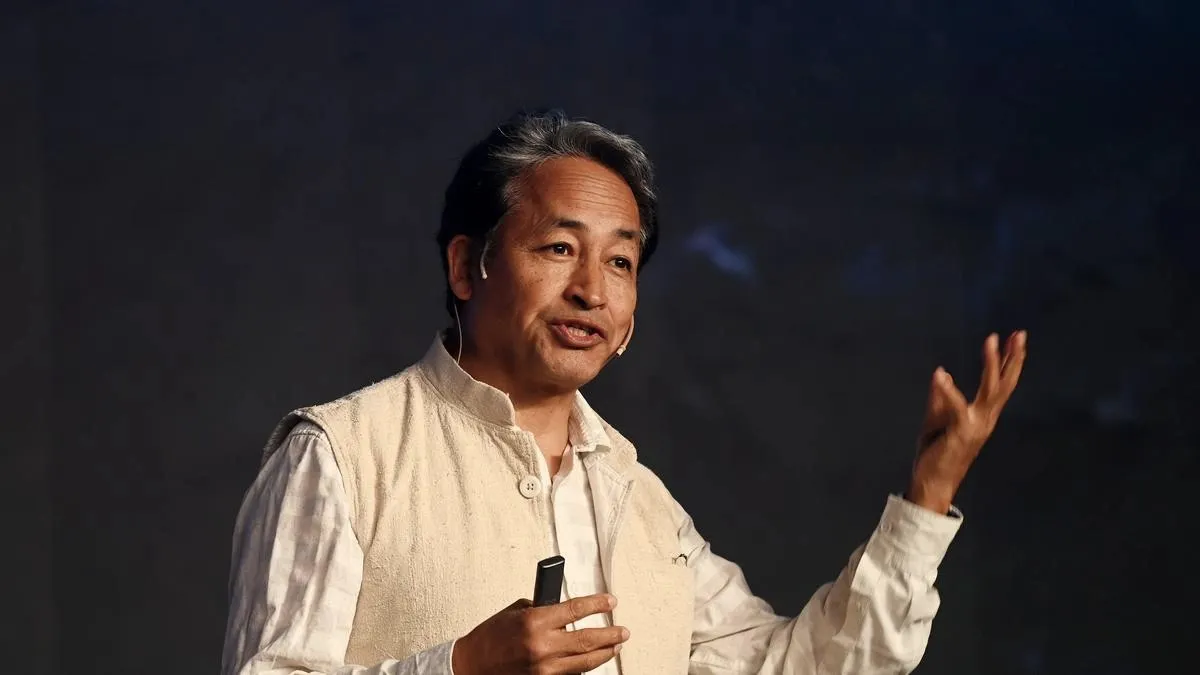
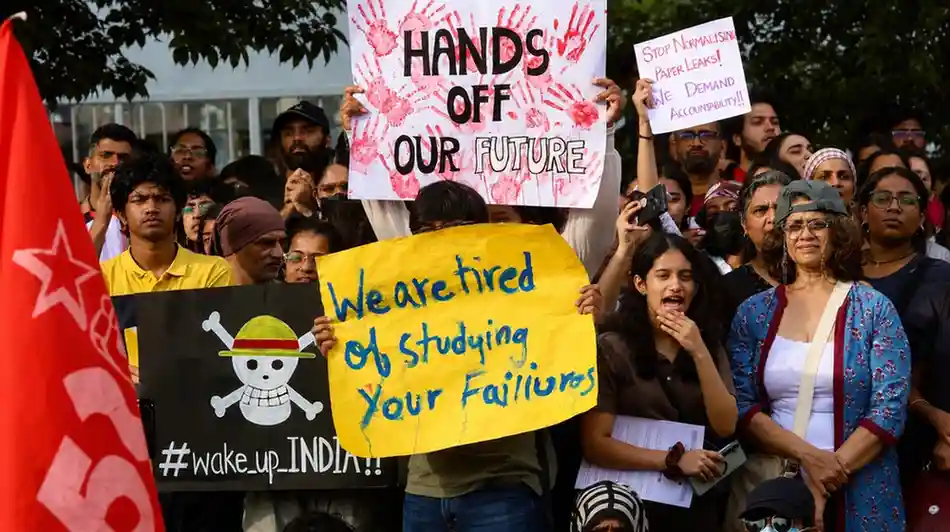
Within a day, a 30-year-old political communications strategist named Abhijeet Dipke had turned the insult into a party name. The Cockroach Janta Party registered two lakh members in under a week memes first, then a manifesto, then a genuine street presence at Jantar Mantar. Ladakh-based activist Sonam Wangchuk lent it weight and a hunger strike; educators, parents and students furious over NEET paper leaks lent it numbers.
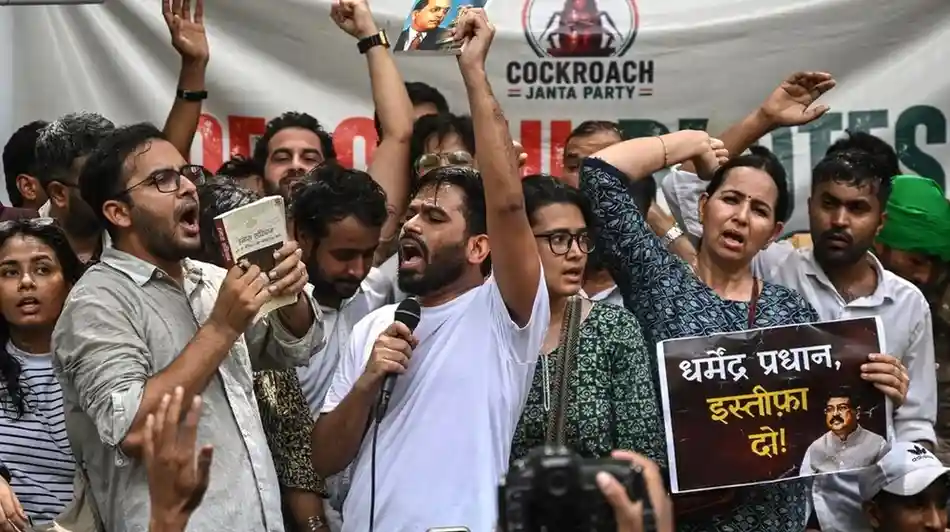
By July, what had started as a joke had a fast that put Wangchuk in hospital reportedly against his own wishes and a march scheduled for the opening day of Parliament's monsoon session.
Delhi Police had made their position clear before a single protester showed up on July 20: no permission granted, prohibitory orders in place under Section 163 of the new criminal code.
CJP went ahead anyway, asking marchers to carry the tricolour and portraits of Ambedkar or Gandhi rather than party flags, and to keep things peaceful.
It didn't stay that way. By the day's end, police said 118 of their personnel had been injured and roughly 70 protesters detained; officers pointed to viral clips of officers being pepper-sprayed and pelted with stones, and to police vehicles that came away damaged.
Protesters and their lawyers told a different story one involving lathis, tear gas, and, in some accounts, far worse.
Three PILs landed before a Delhi High Court bench of Chief Justice Devendra Kumar Upadhyaya and Justice Tejas Karia on Wednesday.
Senior advocate N. Hariharan argued the protest had begun as a lawful exercise of constitutional rights and that, even so, the Delhi Police Standing Orders on crowd control weren't followed officers, he said, weren't wearing name plates, which makes identifying anyone accountable later nearly impossible.
Another counsel, Gopal Sankaranarayanan, told the court his team had gone through roughly 130 videos and found people using force who weren't even in police uniform.
One allegation stood out for how bluntly it was put: policemen, a petitioner said, had been "molesting women, beating them on private parts... it is so ghastly." He wanted FIRs against identifiable officers and an inquiry into the whole episode.
Additional Solicitor General S.V. Raju, appearing for the Centre and Delhi Police, wasn't having it. The petitions, he argued, leaned on selective clips social media videos that can be edited or taken out of context while ignoring footage showing officers themselves getting hurt and a crowd that had turned aggressive first.
He also raised a procedural point: the petitioners, he said, hadn't even tried going to a magistrate before rushing to a writ court.
The bench wasn't fully persuaded on that last point. "Was this an isolated incident? Perhaps not," the Chief Justice observed, rejecting the idea that every affected person should simply go file their own complaint.
The court stopped short of commenting on whether the videos were genuine or whether the allegations held up that's for later but it did order the CCTV footage, videography and other records preserved, gave the government four weeks to respond, and set the next hearing for September 11.
Across town, a differently pitched version of the same argument reached the Supreme Court, mentioned before a bench headed by CJI Surya Kant himself. Advocate Narendra Mishra tried to make the case that students were raising legitimate concerns about NEET and the National Testing Agency.
He didn't get far. "Don't waste our time, and don't waste your time," the CJI told him. When Mishra pressed on, mentioning the videos again, the response was even shorter: "We are not interested in videos, we don't have time to watch."
The plea wasn't listed. It wasn't the first such rebuff, either the Delhi High Court itself had waved off an urgent mention a day earlier, telling a petitioner "don't drag the court into this." What's different by Wednesday evening is that one court has now committed, at least on paper, to looking at the footage eventually.
The other has made no such promise.