O
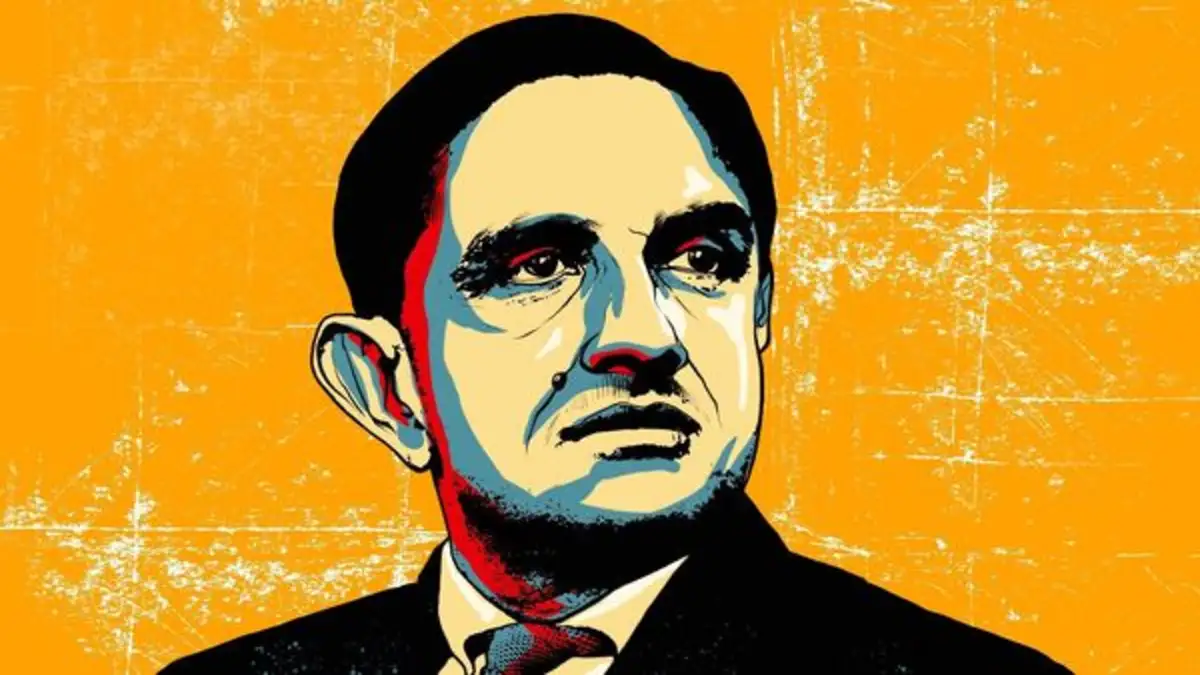
n every August 12, the ISRO observes the 107th birth anniversary of Dr. Vikram Ambalal Sarabhai, the man without whom none of the organization’s activities today can happen at all.
The scientist, astronomer, and visionary, born on this day in 1919 in Ahmedabad, had industrialist parents who could keep him out of all other interests other than commerce. But, contrary to his parent's wishes, Sarabhai chose the educational path by pursuing further studies at the Cambridge University in the field of physics after finishing his education at the Gujarat College.
Having completed his doctorate degree, Sarabhai took up astronomy in India which still lacked means for even bare necessities rather than space exploration.Today the space research program of India is well on its way to establishing a national satellite system while sending probes to the Moon.
Sarabhai's philosophy of using technologies to serve the common people has stayed the main philosophical foundation of the organization till now.
The early years of Sarabhai were marked by his academic education, which began in the Gujarat College in Ahmedabad and then continued in the form of an undergraduate study at Cambridge University, followed by a PhD in physics. At the university, Sarabhai studied cosmic rays in the famous scientist, the Nobel Prize winner C.V. Raman’s lab.
But Vikram Sarabhai was never the kind of scientist to focus purely on lab experiments. From early on, he realized that science was an important aspect of nation-building. Sarabhi's vision and sense of purpose were also influenced by the family environment - his father, Ambalal Sarabhai was a noted industrialist and nationalist.
Just after India gained its independence in 1947, Sarabhi established the Physical Research Laboratory (PRL) in Ahmedabad, which became one of the leading centers of the country studying space and atmospheric sciences. It was an unusual decision - building scientific research infrastructure at the time when the state barely knew how to use them correctly.
The legacy of Sarabhai is undoubtedly ISRO. As such, he created the Indian National Committee for Space Research in 1962, which would eventually become ISRO in 1969, and of which Sarabhai became the first chairman.
It is worth noting that Sarabhai achieved this not by simply creating ISRO, but by winning a highly compelling argument to create one. Namely, there was widespread opinion back in the days in the 1960s that India, a poor nation with its hunger issues and many other developmental problems, cannot afford an initiative to launch a satellite.
Indeed, however, under the guidance of Sarabhai, India launched the very first sounding rockets in Thumba, a tiny fishing village near the city of Thiruvananthapuram, working under such harsh conditions as scientists transporting rocket parts in their bicycles, and a nearby church functioning as an early office.
The launch led to the formation of what is now known as the Vikram Sarabhai Space Centre (VSSC), named after Sarabhai and which houses thousands of scientists working on India's own launch vehicles.
Of course, the interests of Sarabhai did not end with the space rockets. The man himself was a big enthusiast of nuclear technology, and after the death of his predecessor Homi J. Bhabha, he became the chairman of the Atomic Energy Commission of India in 1966 and supervised the work of India's nuclear technology program. Also, he founded the Indian Institute of Management, Ahmedabad in order to educate people in proper business management in India as he believed that this education was just as important for the country as any other.
Finally, the Vikram Sarabhai Community Science Centre reflects yet another conviction of Sarabhai as he believed that not only scientists need to cultivate scientific temper, but regular Indians too, even kids. Of course, however, his most famous post-mortem project has to be Aryabhata, the very first satellite launched in India in 1975, as well as the subsequent Satellite Instructional Television Experiment (SITE).
The eminent scientist and visionary died a sudden death in December 1971, aged 52 years during a business trip to the city of Kovalam in Kerala. His untimely death, which deprived him of the opportunity to accomplish his dreams, did not reduce his contribution to the world by virtue of his inventions, such as PRL, ISRO, IIM Ahmedabad, and VSSC, all of which flourished with the help of his students.
He was honored with Padma Bhushan in 1966, and with Padma Vibhushan, which is India's second highest civilian award in 1972 after his death. The year 2019 marks the centenary birthday anniversary of Vikram Sarabhai, for which ISRO remembered its extraordinary founder.
Even today, Sarabhai's own words—"There is no ambiguity of purpose"—are quoted regularly by the scientists and engineers of ISRO as an ethos which reminds them that the Indian space program never intended to be any mere showcase, but rather a careful and methodical instrument of development.