$40 billion. Or maybe $303 billion. Depends who's counting, and depends on the methodology, which is honestly the first thing you learn reading the White House's new trade report: even Washington doesn't seem totally sure how big this problem is. It just knows it's big enough to start naming names.
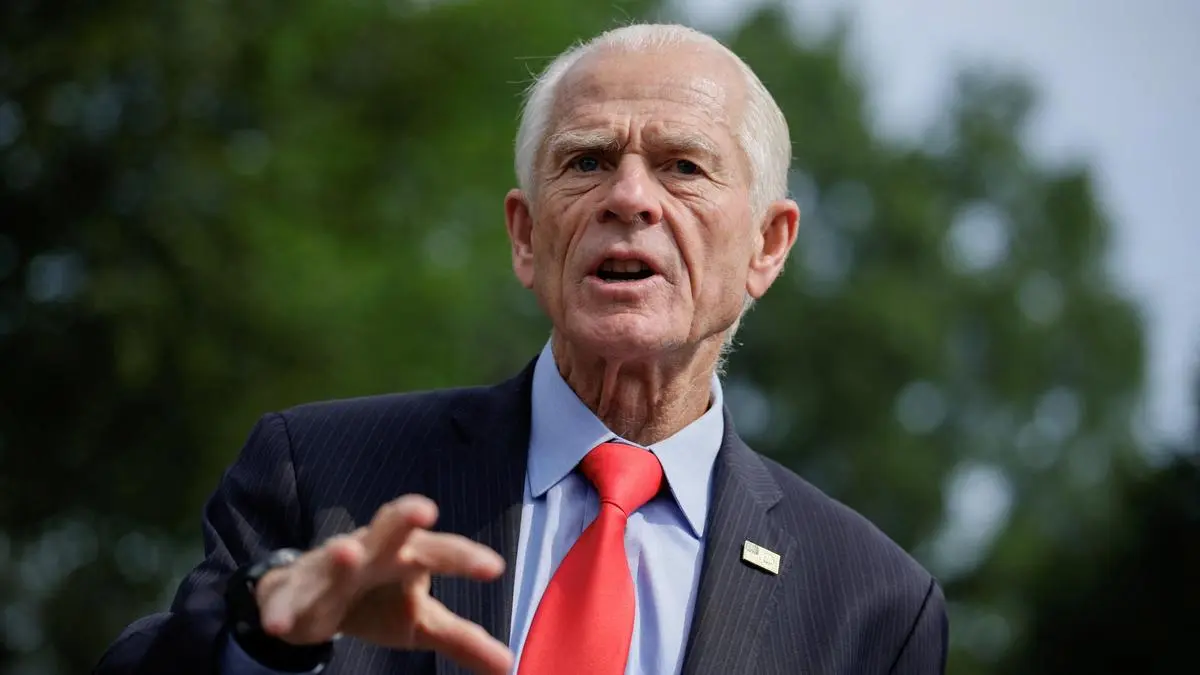
The report is titled "The Great Transshipment Scam", which sounds more like a true-crime podcast episode than a federal policy document. It was written by Peter Navarro, the president's counsellor for trade and manufacturing, released Thursday, and it lists more than 40 countries as part of what it calls China's shadow network. India made the list. Not quietly either.
Strip away the drama and the accusation is fairly simple, and not even new. Since 2018, when the first Trump administration slapped Section 301 tariffs on Chinese goods, exporters in China have allegedly gotten creative about dodging them. Relabel something here. Repackage it there. Tweak the paperwork on where it "originated". A compressor built in Shenzhen ends up wearing an Indian, Mexican, or Vietnamese passport by the time it lands at a US port, and customs never catches the switch.
Navarro didn't soften it for reporters. "For years, the great transshipment scam has let Communist China launder its exports through more than 40 countries", he said, listing off Mexico, Canada, the European Union, Japan, South Korea, and India almost in one breath. Which is a little startling if you think about it. These aren't sketchy offshore havens. These are some of America's biggest, most established trading partners, named in the same sentence as accused launderers.
This is where it stops being abstract. The report zeroes in on a specific stretch of Indian industry, the Pune-Gujarat-Chennai belt, and claims it's absorbing Chinese-made pumps and compressors that later show up on American factory floors in Cincinnati, Dayton, and Columbus. Mid-size, unglamorous industrial cities. The kind that don't usually make international headlines but are apparently footing part of the bill here.
It's an awkward one for India to sit with. New Delhi has spent years selling itself as the natural landing spot for manufacturing leaving China, the whole "China plus one" pitch that shows up in every trade ministry presentation. If this report holds up under scrutiny, at least some of that shift might turn out to be paperwork dressed up as production. That's a much less flattering story.
Because there's always an AI part now. The administration wants to roll out something called "Detective Border," a system meant to feed US Customs and Border Protection a constant stream of shipment records, ownership data, product classifications, and routing histories, then flag whatever doesn't quite line up. Computer vision on cargo containers gets a mention too. It's less a single tool and more an entire surveillance layer bolted onto the existing customs process.
Treasury Secretary Scott Bessent added his own framing on top of Navarro's, calling illegal transshipment something worse than a paperwork problem. In his telling it's a deliberate move to undercut American manufacturers and quietly starve federal revenue that should've been collected at the border in the first place.
None of this is landing in a vacuum, and that's probably the part that matters most. India and the US are mid-negotiation on a broader trade deal right now, one already strained over India's continued purchases of Russian oil. Navarro has been loud about that for months. Dropping a transshipment accusation into an already tense room doesn't exactly read as a goodwill gesture.
Worth saying plainly: transshipment by itself isn't illegal. Goods pass through third countries constantly, for entirely boring, legitimate logistical reasons. What Washington is actually objecting to is origin fraud, lying about where something was made to dodge a tariff bill. Proving that, shipment by shipment, factory by factory, is a far messier job than releasing a report with a dramatic title attached to it.
The White House has accused India and more than 40 other countries of helping China dodge US tariffs by rerouting goods through their territory under false origin labels. The report specifically names India's Pune-Gujarat-Chennai industrial belt, alleging Chinese pumps and compressors are reaching American factories disguised as Indian-made. Washington estimates the annual cost of transshipment somewhere between $40 billion and $303 billion, and plans an AI system called "Detective Border" to catch offenders going forward. The accusation lands in the middle of already-strained India-US trade talks over Russian oil purchases, adding fresh friction to a delicate relationship.