T he incident has sparked one of the most harrowing rescue operations in the state of Uttarakhand in recent years and serves as yet another reminder of the challenges posed by the rugged Himalayan landscape to the construction projects carried out there.
The accident happened during what should have been a regular working day. On Thursday between 6.30-6.45pm, employees of Hindustan Construction Company (HCC), the contractor engaged in constructing the tunnel, were carrying out underground works at Tehri Hydro Development Corporation Limited (THDC) project site located in Mayapur, Pipalkoti, Chamoli district.
The disaster started when a huge surge of water mixed up with debris entered the tunnel causing some parts of it to be blocked. As a result, 22 workers were stuck inside the tunnel.
On Thursday evening, the incident sparked confusion among all concerned parties involved. Rescues came forward to save the victims who were caught in the mountainside trap. By the time rescuers managed to stabilise operations early Friday morning, they reported that at least seven of the 22 workers killed in this tragedy had been confirmed dead after arrival at district’s hospital in Gopeshwar. While others have been recovered, many of whom are now critically ill, there remain two more whose status remains unknown at this stage.
The tunnel forms a crucial component of the Vishnugad-Pipalkoti Hydroelectric Project which involves development of a run-of-the-river scheme on the Alaknanda river by THDC.
Tunnels are commonly built as an element of these hydro-electric projects on various parts of the Alakananda (and other rivers), all of which cut across the geologically unstable terrain in the state. A few months ago, another tunnel collapsed in the area and was evacuated because of the risk of sudden water ingress in the monsoon season.
In their statement, officials said that the sudden surging of water “believedly due to a burst of pressure from inside the hill or due to accumulation of rainwater entering fresh excavation of rock” surged down the shaft in great quantity, pushing back the existing machinery and giving workers hardly any option to evacuate.
Some of the personnel working inside the site at the moment of occurrence were close to the face of the tunnel while others were a bit back but did get enough time to run out of the tunnel as soon as they heard about the accident since the passageway got blocked up with debris very quickly. However, there may be some chance that the victims might have been swept away along with the torrential rush of water.
A day prior to the accident on August 11, a cloudburst washed out the Tamak Nallah Bailey bridge in the same district of Udham Singh Nagar, cutting off connectivity to many villages in the nearby Niti valley, leaving one person missing from that incident. In addition, Uttarakhand also witnessed a magnitude-4 plus earthquake in its northern Himalayan belt.
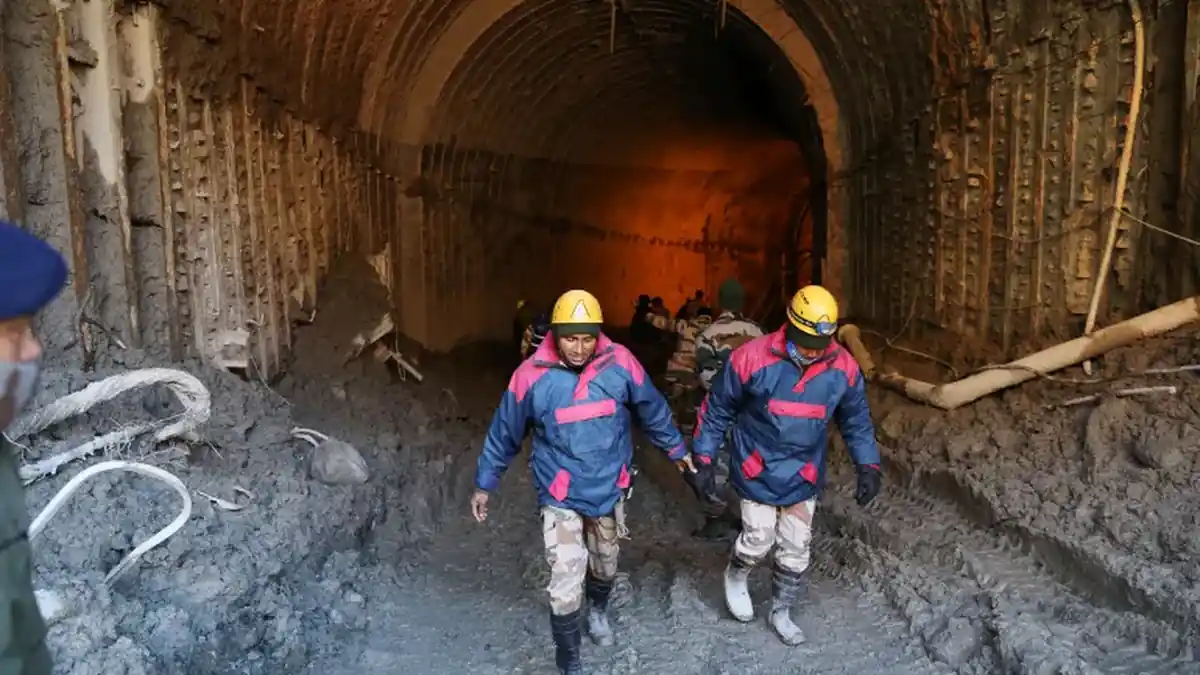
The word of the incident triggered an instantaneous alert across administrations. Chamoli District Magistrate Gaurav Kumar told me that the administration got its alert within minutes and the rescue units were dispatched to the spot immediately. Teams comprising of National Disaster Response Force (NDRF), State Disaster Response Force (SDRF), Indian Army, Indo-Tibetan Border Police (ITBP), District Incident Response Force(DIRF), Central Industrial Security Force (CISF) and even local police arrived at the spot where heavy machinery were deployed for clearing up debris obstructing the passage.
At the same time pumps were being operated non-stop to clear out waters which has inundated large parts of the tunnels. Inflatable Drum Boats were brought by some teams of SDRF as they tried to venture into the water logged zones of the tunnel to find survivors.
Officials said by around 9pm on Thursday they were able to rescue 16 workers.
That number increased to 19 overnight, though confirmation of fatalities started coming through from the hospital at Gopeshwar during the night.
A number of people who have been rescued require urgent medical attention, but officials indicate these will be moved on to higher-level medical facilities where needed.
Pushkar Singh Dhami, the Chief Minister of Uttarakhand, has taken up the direct coordination of the operation. He reached the state’s disaster operations center in Dehradun, where he is tracking the progress of the rescue operation personally.
He said officials are working on “war footing” to ensure all resources—both men and machinery—are put into motion to take out the stranded workers.
In a post on his social media handle today, the CM shared that 16 of the 22 trapped workers have been successfully rescued. However, efforts continue to take out the remaining ones.
As such, Dhami reiterated that the first priority of the government is the safe evacuation of all the stranded workers and said he receives real-time updates from officials stationed at the site.
The incident was not the first one of its kind to hit a Himalayan hydro-tunnel. Last year itself, an almost identical situation occurred when construction workers were caught up by a torrential flow of water and slush while working in the depths of a tunnel during the execution of the Srisailam Left Bank Canal Project in the state of Telangana.
Eight workers went missing that day, and although some of them were later found after weeks, others remain unaccounted for even today.
While efforts are underway to locate the two workers who have yet to surface from the Chamoli site as we speak, perhaps it is time to ask ourselves some difficult questions—how well do we carry out geological risk assessments before embarking on these massive infrastructure projects? Is the process followed while constructing the tunnels compliant with modern-day safety standards? What sort of plans are in place if there comes another monsoon season?
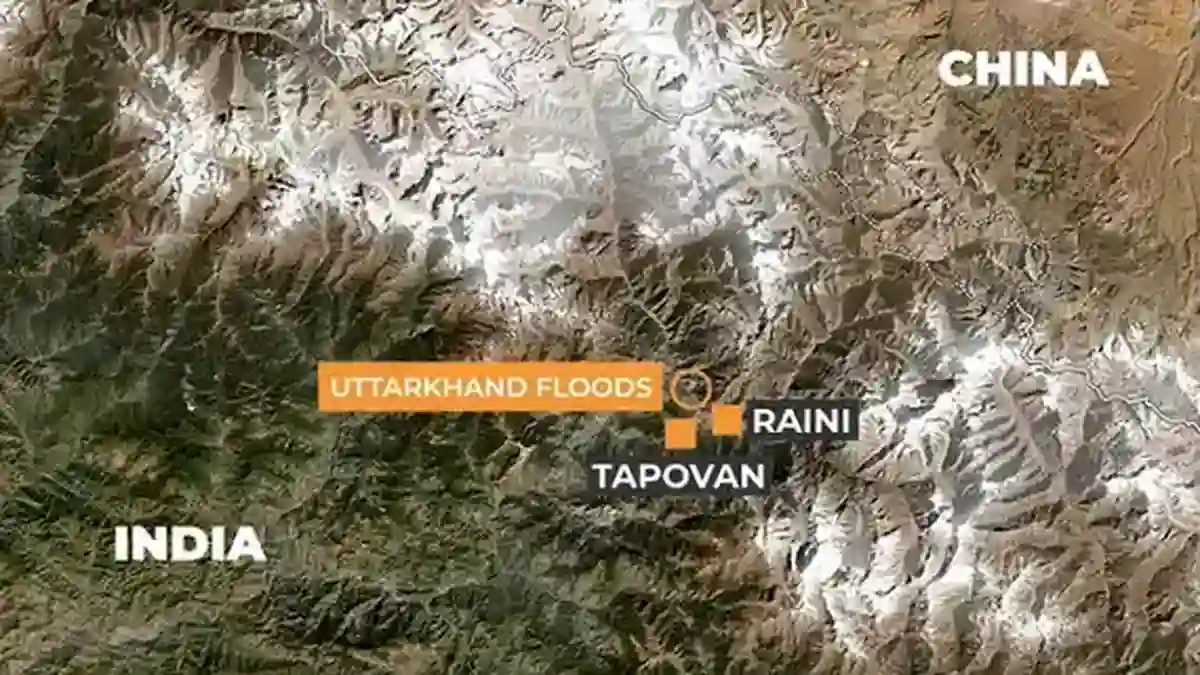
Photo: @Planet Lab Inc