W
ednesday afternoon, the sky over two countries did something neither had seen in a very long time. It went dark. Not cloudy-dark, not storm-dark. Properly, briefly, black-as-night dark, in the middle of the day.
The eclipse took a route that would look wrong on a map if you didn't know better. It started at sunrise over a frozen, empty stretch of Russia's Taymyr Peninsula, so far north that summer "sunrise" there barely counts as one. From there the Moon's shadow curved up and over the North Pole itself, dropped onto the Greenland ice sheet, and then headed for the two places where anyone had actually bothered to plan a trip around it: Iceland and Spain.
The umbra, that narrow strip of true darkness the Moon throws down, is only about 293 kilometres wide this time around. It doesn't hang around, either. Astronomers clocked it racing across the Icelandic coast at something like 3,400 kilometres an hour. Which means even at its longest, totality anywhere along the path barely stretched past two minutes.
That's the whole appeal, honestly. The point of maximum totality, two minutes and 18 seconds, happened over open water about 45 kilometres off Iceland's Látrabjarg peninsula. Nobody was standing there. Plenty of people got close, though, close enough that it hardly mattered.
For Icelanders this wasn't just rare. It was close to once-in-a-lifetime, full stop. The country's last total eclipse was back in June 1954. The next one isn't due until 2196, which means pretty much nobody watching this week will get a second shot.
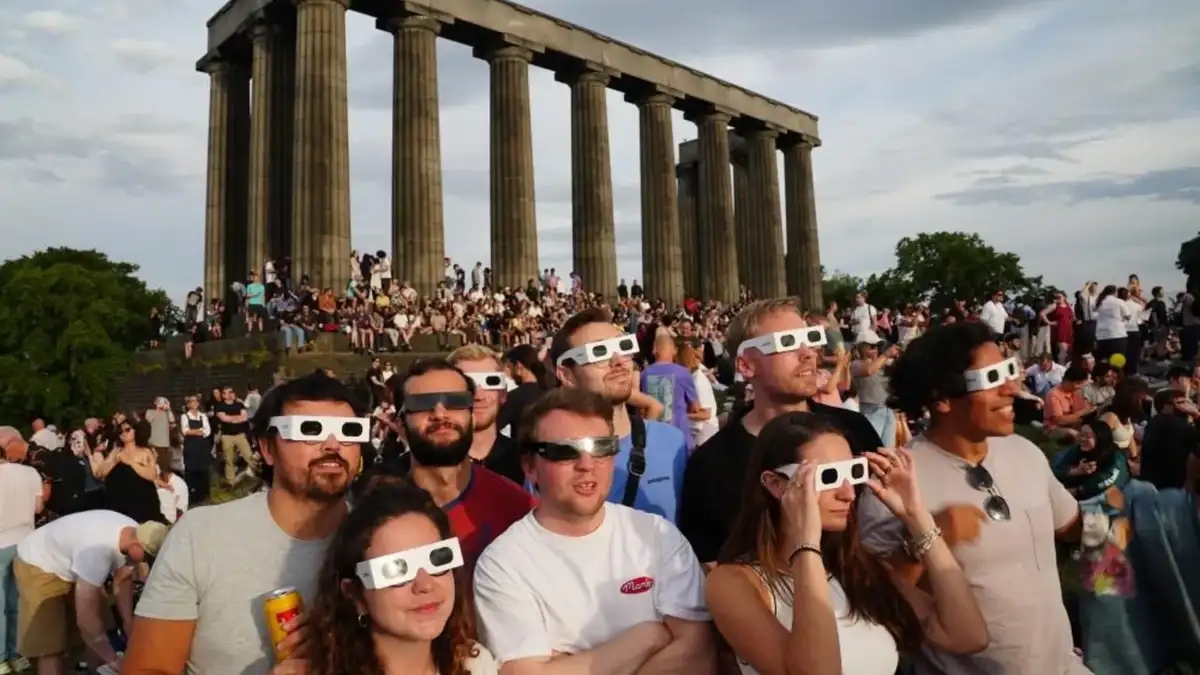
The shadow first hit Icelandic ground at the Straumnes lighthouse out in the Westfjords, around 17:43 UT, where totality lasted about a minute and 26 seconds. From there it swept down across the Snæfellsnes peninsula and into Reykjavík, where people got a shorter run, just 59 seconds, starting around 17:48 local time. Streetlights apparently came on. Birds went quiet, according to people posting from the scene. Then, just as quickly, it was over and the sun came back out like nothing happened.
Spain hadn't had a total eclipse since 1905. This one showed up in a particularly dramatic form, too, arriving close enough to sunset that the sky went dark orange before it went black.
Totality hit the Spanish coast around 18:27 GMT and moved southeast from there. Cities close to the centerline, León and Burgos among them, got roughly 105 and 103 seconds of darkness. By the time the shadow reached Palma de Mallorca it had thinned out a bit, down to about a minute and 36 seconds, before slipping off into the Mediterranean at sunset.
Small towns that most people couldn't have pointed to on a map a month ago found themselves swamped. Bloomberg and a few other outlets described tourists pouring into rural Spain and Iceland in numbers those places rarely see even in peak summer, turning quiet sheep pastures and half-abandoned villages into makeshift viewing parties, folding chairs and long lenses everywhere you looked.
Eclipse chasers got something of a two-for-one this year. August 12 lands close to the peak of the Perseid meteor shower, one of the more dependable annual displays of shooting stars. During the brief window of totality, with the sky suddenly dark enough to show stars in the middle of the afternoon or early evening, a few lucky observers say they caught Perseid streaks overhead too, not something eclipse photographers usually get to plan for.
NASA ran a livestream starting early afternoon Eastern time, and outlets like CNN, the Guardian and the BBC kept rolling coverage going as totality crossed from Iceland into Spain. Researchers from San Francisco's Exploratorium reportedly set up in a nearly abandoned village near Burgos just to broadcast the moment out to people who couldn't be there themselves.
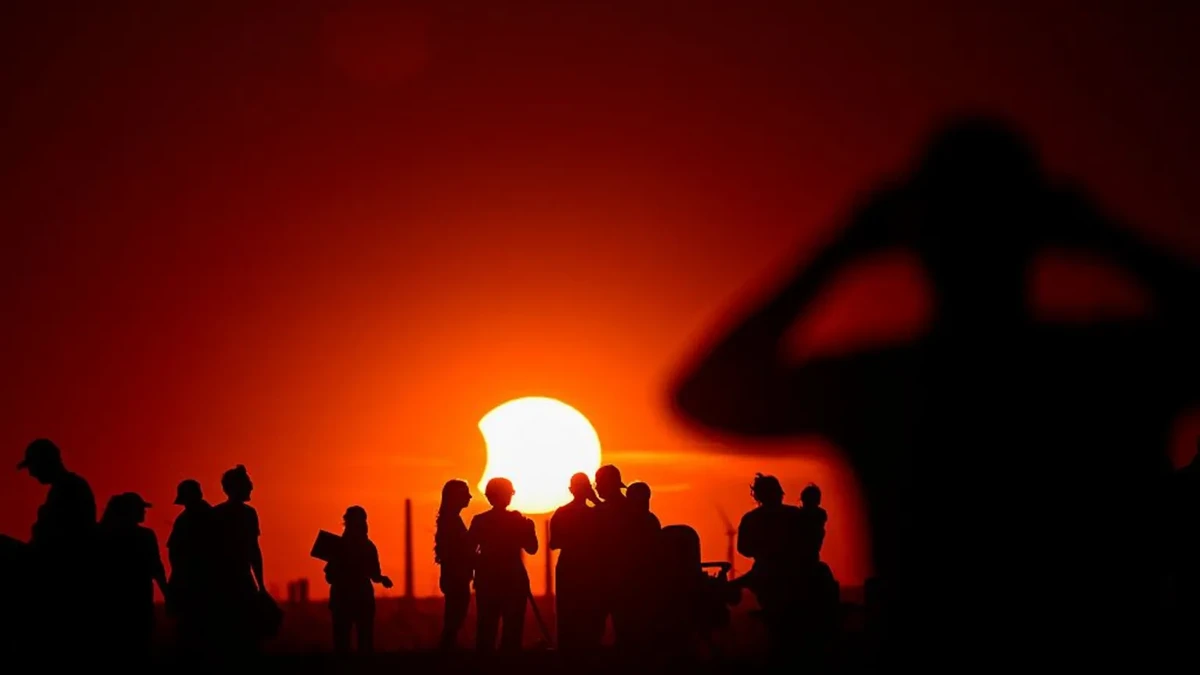
Photo: @Ina Fassbender/AFP/Getty Images
Good news if you missed it: the wait isn't long, at least not by eclipse standards. On August 2, 2027, the Moon's shadow comes back around, this time tracking across southern Spain, North Africa, and on into Saudi Arabia and Yemen. Some early estimates are already calling it one of the longer totalities of the century, at least in parts of its path.
For Iceland, though, this one was closer to a goodbye than a preview. Barring some very long lives, nobody who watched the sky go dark over Reykjavík this week is getting another chance.